Mold in Walls in Los Angeles
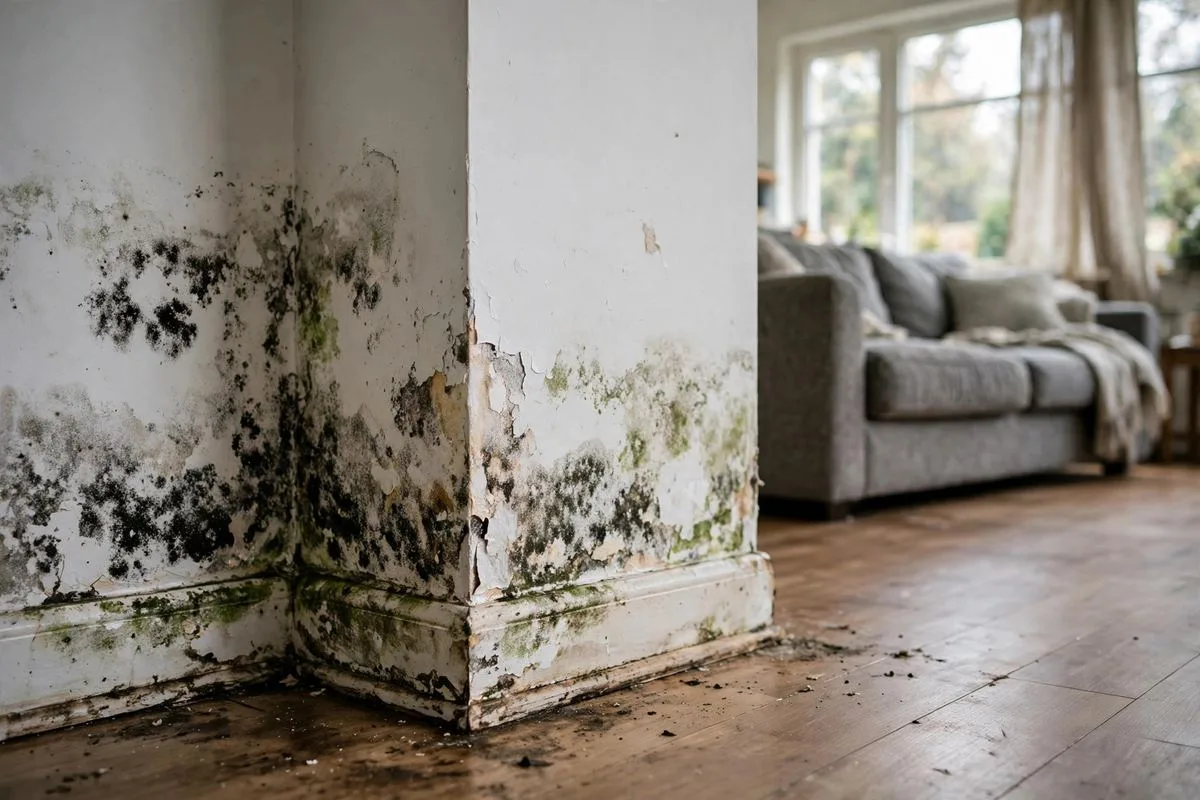
Mold in walls is the most common hidden mold problem in Los Angeles homes. A slow plumbing leak, a roof leak that runs down inside a wall cavity, or water seeping through stucco can feed mold for months behind drywall while the room itself looks fine. The first visible sign is often a small stain, a bubbling patch of paint, or a musty smell with no obvious source.
Mold Removal Experts LA is a referral service. We do not perform the work ourselves. We connect you with independent local mold providers who find mold inside walls, open only what needs opening, and carry out the removal. This page explains how wall mold is found and handled, and what to expect when a provider opens a wall in your home.
Before the provider arrives, it helps to note the history: when the stain first appeared, whether it grows after rain, and whether any plumbing work was done nearby. A stain that appeared after a storm points to the roof or the stucco; one that grows steadily regardless of weather points to plumbing. That history saves the provider time and saves you an unnecessary opening in the wrong wall.
How mold gets inside walls
LA homes are mostly wood-framed with drywall over studs, and that construction hides leaks well. A pinhole leak in a copper supply line, a slow drain leak, or a shower pan that seeps can wet the inside of a wall cavity for months. Stucco exteriors add another route: hairline cracks or failed flashing let winter rain in, and the water travels down inside the wall before it shows anywhere.
Because the growth is hidden, the amount of mold behind a wall is often much larger than the stain on the surface suggests. That is why providers do not guess from the outside — they measure moisture, and when the readings point to a problem, they open a small section to look.
Signs of mold inside a wall
Wall mold rarely shows itself directly. The signs are indirect, and more than one of them together is a good reason to arrange an inspection:
- A musty smell in one room, or near one wall, that does not go away with cleaning
- Paint that bubbles, peels, or discolours in one spot
- Drywall that feels soft, or baseboards that are warped or pulling away
- A dark stain that grows slowly, especially after rain
- Wallpaper or paint that will not stay stuck in one area
- Allergy-type symptoms that are worse in one room of the house
How providers find mold behind drywall
Providers use a combination of tools rather than tearing walls open at random. A moisture meter maps how far dampness extends behind the surface. A thermal camera can show cold, wet areas inside a wall cavity. A small inspection opening or a borescope camera lets the provider see inside the cavity directly. Air or surface sampling may be used when the extent of growth is unclear.
This matters because opening a wall without knowing what is inside can spread spores through the room. A careful provider maps first, contains the area, and then opens only the section that needs work. If the wall turns out to be dry, you have a small patch to repair rather than a room torn apart.
How wall mold removal works
Once the affected area is mapped, the provider sets up containment — plastic sheeting and negative air pressure — to keep spores out of the rest of the home. The damaged drywall and insulation are cut out, bagged, and removed. The framing behind it is cleaned and dried, and the area is checked with a moisture meter before any rebuilding begins.
Rebuilding is a separate step from remediation. Some providers handle both; others leave the rebuild to a contractor you choose. Either way, the wall should not be closed up until it is dry and the moisture source — the leak, the flashing, or the stucco crack — has been fixed. Closing a damp wall is how the same problem returns a year later.
Removing mold from walls: what homeowners can and cannot do
Small surface mold on a painted wall — a patch you can see fully, on a hard, non-porous surface — can often be cleaned by a homeowner following EPA guidance for small areas. But mold inside a wall cavity, mold covering a large area, or mold that returns after cleaning is not a cleaning job. It means water is getting in somewhere, and the growth is larger than what you can see. That is the point at which an inspection by an independent provider is the sensible step.
Preventing mold in walls after remediation
A remediated wall stays clean only if the water stays out. The prevention work is mostly outside the wall: gutters and downspouts that carry rainwater away from the house, flashing around windows and vents that is intact, and stucco without open cracks. In Los Angeles, winter rain is the test — a wall that stays dry through the rainy season is a wall that has been fixed properly.
Inside, the habits are simpler. Fix plumbing drips promptly, even small ones, because a slow leak inside a wall is the most common cause of hidden wall mold. Keep bathroom exhaust fans working and use them during showers. And if a stain or a musty smell reappears in a wall that was already remediated, do not paint over it — call the provider back. A recurrence usually means the moisture source was not fully fixed, and the provider's warranty or follow-up terms, if any, should be checked at that point.
Related pages
How a referral works
- Tell us about the mold. Where it is, how large the area looks, and whether there has been a leak or flood.
- We connect you with independent local providers. They do the inspection, testing, removal or remediation — we do not perform the work ourselves.
- The provider contacts you. They arrange the visit, explain what they found, and agree the work with you directly.
Frequently asked questions
What is the EPA 10-square-foot rule?
EPA guidance suggests that mold covering less than about 10 square feet on a hard surface can often be handled by a homeowner, while larger areas — or mold inside a wall cavity, on porous materials, or after sewage exposure — should be handled by a professional. It is a rule of thumb, not a law, and the moisture source still needs to be found.
How do I tell if a wall stain is mold or just a water stain?
You cannot tell reliably by looking. A water stain and a mold stain can look alike, and only an inspection — moisture readings, and sampling when needed — confirms what is growing. Do not assume a stain is harmless because it is light in colour, and do not assume it is mold because it is dark.
Will the provider need to open more than one wall?
It depends on the moisture mapping. Water travels inside walls, so the growth may extend beyond the wall with the visible stain. The provider maps the damp area first and opens only the sections the readings point to.
Can mold in one wall affect neighbouring rooms?
Yes. Spores can travel through wall cavities, gaps around pipes, and shared air paths. That is why containment is used during remediation — to keep the work area isolated while materials are disturbed.
What should I do before the provider arrives?
Move furniture away from the affected wall, clear access to it, note when the stain or smell first appeared and whether it changes after rain, and take photographs. Do not paint over the stain before the inspection — it hides the evidence the provider needs.
How is a wall rebuilt after remediation?
New drywall and insulation go in only after the framing is dry and the moisture source is fixed. Repainting comes last. Restoration is often a separate scope from remediation, and the provider's quote should say whether rebuilding is included.
Request a referral
Please note: online requests are not connected yet — the request form for this domain is still being set up. Your details are not sent when you submit this form. For the fastest response, please call (945) 422-7665.
Need mold help in Los Angeles?
Tell us where the mold is and how large the area looks. We will connect you with an independent local provider.
Request a referral Call (945) 422-7665
Mold Removal Experts LA is a referral service. We do not perform mold inspection, testing, or remediation. We connect you with independent local providers who do the work.