Attic Mold Removal in Los Angeles
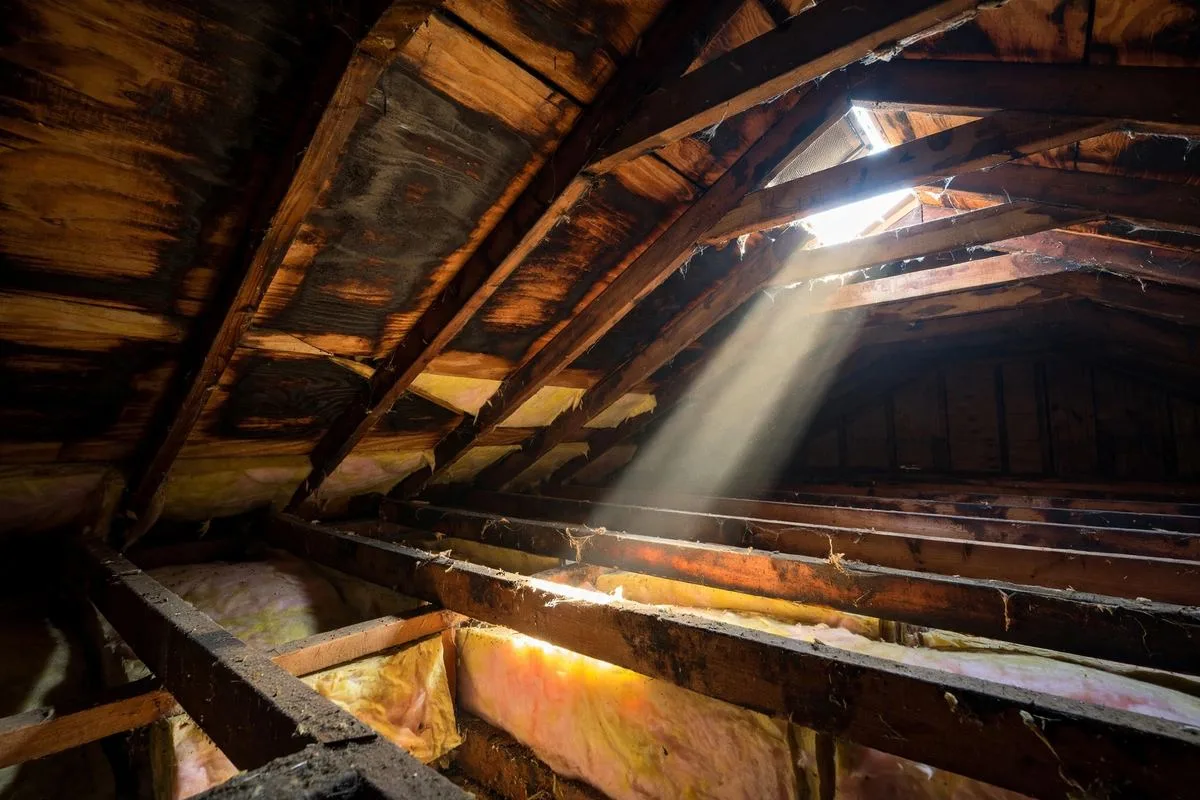
Attic mold in Los Angeles is mold growth on the roof sheathing, rafters, joists or insulation inside the attic, and it almost always traces to water or damp air getting into a space that was never meant to stay wet. The attic is the part of the house most people never look at, which is why attic mold is usually found late: during a roof repair, a home inspection before a sale, or when a stain appears on a ceiling below. Mold Removal Experts LA does not perform attic work itself. This site connects you with independent local providers, and the provider who takes your job inspects the attic, finds the cause, and carries out the removal.
Attic mold is common in Los Angeles because the city's roofs and attics work hard. Winter rain finds its way through worn flashing, cracked tiles, failed vents and skylights. Bathroom and kitchen exhaust fans that vent into the attic instead of outside pump warm, damp air into the space every day. Poor attic ventilation traps that damp air against the underside of the roof deck, where it condenses and feeds growth on the wood.
What causes mold in an attic
A roof leak is the most common cause. Rain enters through damaged flashing around chimneys and vents, through cracked or slipped tiles, through failed skylight seals, or through the flat roof membranes common on Los Angeles homes. The leak may be small and the water may run along a rafter before it drips, so the growth appears some distance from the actual entry point. A provider traces the water by following stains and moisture readings, not by guessing from the location of the growth alone.
Ventilation is the second cause, and it is the one most often missed. An attic needs air moving through it: in through the eaves, out through the ridge or gable vents. When vents are blocked, painted shut or never installed, damp air stays in the attic and condenses on the coldest surface, usually the underside of the roof deck. Bathroom and kitchen exhaust fans that terminate in the attic instead of outside make this worse, dumping warm moist air directly into the space. Fixing the ventilation is part of fixing the mold, not a separate job.
- Roof leaks through flashing, tiles, vents and skylights
- Flat roof membrane failures after winter rain
- Bathroom and kitchen fans venting into the attic
- Blocked or missing attic ventilation
- Condensation on the underside of the roof deck
Common mold in an attic
The mold most often found in attics grows on wood: the roof sheathing, the rafters and the joists. Cladosporium and Aspergillus species are common on attic wood, appearing as dark staining or fuzzy growth on the surface of the sheathing. Stachybotrys can appear where water has soaked into wood or paper-faced insulation for a sustained period. The exact type is confirmed by laboratory analysis if testing is part of the job, and the black mold remediation page explains the common mold types in more detail.
What matters more than the species is the extent. Attic mold often covers a larger area than the homeowner expects, because the growth spreads along the sheathing while the attic goes unvisited. The provider's inspection maps the affected area and the moisture readings across it, and the written scope describes what will be removed or cleaned and what will be dried. Growth on insulation usually means the insulation comes out. Growth on the surface of sound wood can often be cleaned, provided the wood is structurally sound and the moisture source is fixed.
- Dark staining or fuzzy growth on roof sheathing and rafters
- Growth on insulation that has stayed damp
- Stachybotrys where water soaked wood for a sustained period
- Extent is usually larger than expected because attics go unvisited
- Laboratory testing confirms the type when it matters
How attic mold is inspected
An attic inspection starts with access, and the provider will tell you before the visit what access they need. They enter the attic, look for growth, staining and water damage, and take moisture readings on the sheathing, rafters and insulation. They check the roof from inside, the flashing around vents and chimneys, the exhaust fan terminations, and the ventilation openings. They also check the ceiling below for stains that mark where water has travelled.
The inspection produces a written scope: where the growth is, how large the affected area is, what the moisture readings show, and what the likely cause is. That scope is the basis for the removal quote. If the roof itself needs repair, the provider says so plainly, and that repair is a roofer's job, not a mold provider's job. The scope should state which parts of the work the mold provider will do and which parts need another trade.
- Access to the attic and the rooms below it
- Moisture readings on sheathing, rafters and insulation
- Checks of flashing, vents, skylights and fan terminations
- Ventilation openings checked for blockage
- Written scope with findings and the likely cause
How attic mold is removed
Attic mold removal follows the same contained process as other mold remediation, adapted to the space. The work area is contained as far as the attic allows, and affected insulation and any damaged sheathing are removed in sealed bags. Sound wood with surface growth is cleaned with methods suited to the material, and the space is dried until moisture readings show it is dry. The roof leak or ventilation problem is fixed as part of the job, or the provider tells you plainly what a roofer or ventilation contractor needs to do.
Attic work is physically demanding and the space is confined, which is one reason it is not a do-it-yourself job. The provider works in protective equipment, with filtered air equipment running, and the containment keeps spores from drifting down into the living space below. After the work, independent clearance testing can verify the result, and that testing should come from a separate provider, not from the company that did the removal.
- Affected insulation and damaged sheathing removed in sealed bags
- Sound wood with surface growth cleaned in place
- Space dried until moisture readings show it is dry
- Roof leak or ventilation problem fixed as part of the job
- Independent clearance testing verifies the result
Why attic mold keeps returning
Attic mold returns when the water or the damp air is still getting in. A roof that still leaks, a bathroom fan that still vents into the attic, or ventilation that is still blocked will bring the growth back to the same sheathing, often within a season. That is why the scope of work should include the cause, not just the cleanup, and why a provider who proposes to clean the attic without looking at the roof or the fans has not finished the job.
After the work, the attic should be checked again after the next winter rain. That is the honest test of whether the cause was fixed. The provider can advise on what to look for: new staining on the sheathing, damp insulation, or a musty smell in the rooms below. Prevention after the job is straightforward: keep the roof maintained, keep vents clear, and make sure every exhaust fan terminates outside the attic.
- A roof that still leaks brings the growth back
- Fans venting into the attic keep the space damp
- Blocked ventilation traps moist air against the roof deck
- Check the attic again after the next winter rain
- Keep the roof maintained and vents clear
What affects the cost of attic mold removal
No price is quoted on this site, because the cost depends on the size of the affected area, how much insulation must be removed, whether the sheathing can be cleaned or must be replaced, and whether a roof repair is part of the job. Only the provider who has seen the attic can quote it. The cost guide explains the factors that move pricing for mold work generally. When you request attic help, ask whether the quote includes the roof or ventilation fix, or whether that is a separate trade.
- Size of the affected area in the attic
- How much insulation must be removed
- Whether sheathing can be cleaned or must be replaced
- Whether a roof repair is part of the job or a separate trade
Related pages
How a referral works
- Tell us about the mold. Where it is, how large the area looks, and whether there has been a leak or flood.
- We connect you with independent local providers. They do the inspection, testing, removal or remediation — we do not perform the work ourselves.
- The provider contacts you. They arrange the visit, explain what they found, and agree the work with you directly.
Frequently asked questions
What causes mold in an attic?
Roof leaks and poor ventilation are the two main causes. Rain enters through flashing, tiles, vents or skylights, and bathroom or kitchen fans that vent into the attic pump warm damp air into the space. Blocked ventilation traps that damp air against the underside of the roof deck, where it condenses and feeds growth.
How do I know if I have mold in my attic?
Look for dark staining or fuzzy growth on the roof sheathing and rafters, damp insulation, a musty smell in the rooms below, or stains on the ceiling. Most attic mold is found during a roof repair or a home inspection, because attics go unvisited. A professional inspection with moisture readings confirms the extent.
Can attic mold be cleaned, or does the wood have to be replaced?
It depends on the condition of the wood. Surface growth on sound wood can often be cleaned in place. Wood that is rotted or structurally damaged, and insulation that has stayed damp, usually has to be removed. The provider's inspection decides which applies.
Is attic mold dangerous?
Mold in an attic should be treated seriously and handled properly, and it can affect the air in the home below. Health questions about mold exposure belong to a doctor. The practical response is inspection, contained removal, a fix for the moisture source, and independent verification.
Does attic mold affect a home sale?
Yes, it often comes up during a buyer's home inspection. A written inspection report, a defined scope of work and independent clearance testing after remediation give a buyer and seller a clear record of what was found and what was done. The mold assessment page explains the documentation involved.
How long does attic mold removal take?
It depends on the size of the affected area and how long it has been wet. A small contained job can take a day or two, including drying time. A larger job across the whole attic, or one that needs a roof repair as well, takes longer. The provider who scopes the job can give a realistic timeframe after seeing it.
Request a referral
Please note: online requests are not connected yet — the request form for this domain is still being set up. Your details are not sent when you submit this form. For the fastest response, please call (945) 422-7665.
Need mold help in Los Angeles?
Tell us where the mold is and how large the area looks. We will connect you with an independent local provider.
Request a referral Call (945) 422-7665
Mold Removal Experts LA is a referral service. We do not perform mold inspection, testing, or remediation. We connect you with independent local providers who do the work.