Bathroom Mold Removal in Los Angeles
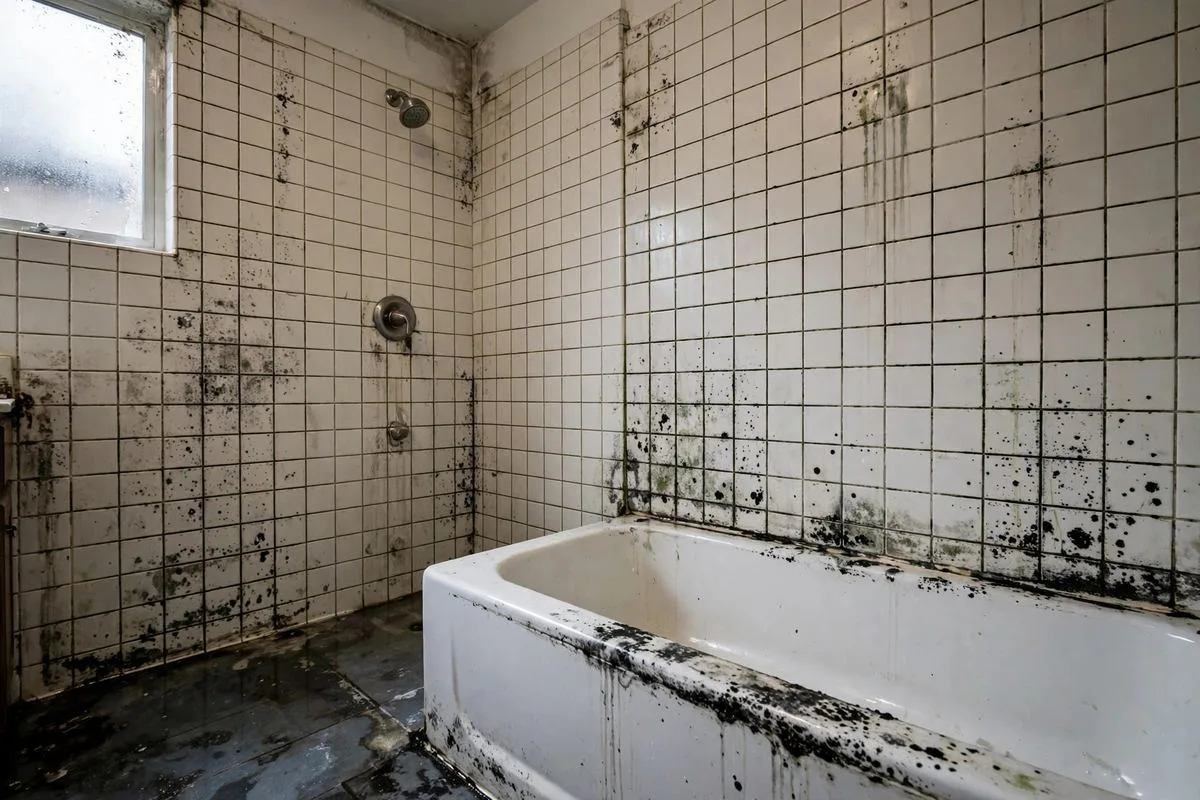
Bathroom mold removal in Los Angeles is the contained removal of mold growth in bathrooms, where it most often appears on grout, caulk, tile, drywall and ceilings. Bathrooms are the wettest rooms in a home, and they are the rooms where mold is most often found first. Mold Removal Experts LA does not perform bathroom mold work itself. This site connects you with independent local providers, and the provider who takes your job inspects the bathroom, finds the moisture source, and carries out the removal.
Most bathroom mold is a ventilation problem, a plumbing problem, or both. A shower used daily in a bathroom with no working exhaust fan keeps the room damp for hours. A slow leak behind the shower wall or under the sink wets the drywall from the inside. Grout and caulk that have cracked or failed let water behind the tile. The visible growth on the grout is often only the surface of a larger problem inside the wall, which is why a provider inspects before they clean.
Where bathroom mold grows
The most visible bathroom mold grows on grout lines, caulk and tile in the shower and around the tub. It appears as dark spots and streaks that return after cleaning, because the growth is in the porous grout and behind the tile, not only on the surface. Mold also grows on bathroom ceilings, where warm moist air rises and condenses, and on drywall around the shower, the toilet and the sink, where leaks and splashing keep the material damp.
The growth that matters most is the growth you cannot see: inside the wall behind the shower, under the tub, and under the bathroom floor. A slow leak from a shower valve, a drain or a toilet seal can wet the wall cavity for months before a stain appears on the visible surface. A provider uses moisture readings to check inside the wall before deciding the scope, because cleaning the visible grout alone does nothing for the growth behind it.
- Grout lines, caulk and tile in the shower and around the tub
- Bathroom ceilings where warm moist air condenses
- Drywall around the shower, toilet and sink
- Inside the wall behind the shower and under the tub
- Under the bathroom floor from slow plumbing leaks
Ventilation: the most common cause
A bathroom exhaust fan that works, and is used, is the single most effective defense against bathroom mold. The fan removes the warm, moist air a shower produces before it condenses on walls and ceilings. Many Los Angeles bathrooms, especially in older homes and apartments, have fans that are undersized, noisy and therefore never switched on, clogged with dust, or venting into the attic or wall cavity instead of outside.
A provider who inspects a bathroom checks the fan: whether it runs, whether it moves enough air, and where it vents. If the fan is the problem, fixing or replacing it is part of the job, and the provider will say so. After the work, the habit matters as much as the hardware: run the fan during every shower and for a period afterwards, and leave the bathroom door open after use so the room dries. The mold prevention page covers ventilation in more detail.
- Fans that are undersized, noisy or never switched on
- Fans clogged with dust or not moving enough air
- Fans venting into the attic or wall cavity instead of outside
- Run the fan during every shower and afterwards
- Leave the bathroom door open so the room dries
Plumbing leaks behind bathroom walls
A slow plumbing leak behind a bathroom wall is the most serious bathroom mold cause, because it wets the drywall and framing from the inside for a long time before anything shows. Shower valves, tub drains, toilet seals and supply lines are the usual sources. The first visible sign is often a stain on the ceiling below, a soft spot in the drywall, or a musty smell that appears when the shower runs.
A provider traces the leak with moisture readings through the wall and the floor, and the scope of work depends on what they find. If the drywall inside the wall is colonized, it comes out under containment. If the leak is still active, the water is stopped first, and the plumbing repair is either part of the provider's scope or a plumber's job that happens alongside. The written scope should state which it is before work begins.
- Shower valves, tub drains, toilet seals and supply lines
- First signs: ceiling stains, soft drywall, musty smell
- Moisture readings trace the leak inside the wall
- Active leaks are stopped before remediation begins
- Plumbing repair may be a separate trade
How bathroom mold is removed
Bathroom mold removal starts with the inspection and the moisture readings, which decide whether the job is a surface cleanup or a contained removal inside the wall. Surface growth on tile, glass and other hard materials can often be cleaned in place. Growth in grout, caulk and drywall is handled differently: the affected porous material is removed under containment, the remaining surfaces are cleaned, and the area is dried until moisture readings show it is dry.
Small areas of surface mold on hard, non-porous bathroom surfaces can sometimes be cleaned by a homeowner, and the EPA notes this for small areas. Professional removal is the right call when the growth is in drywall or behind tile, when it keeps returning after cleaning, when the moisture source is unknown, or when the affected area is large. After the work, the grout and caulk are replaced and the ventilation is fixed, so the room dries properly between uses.
- Inspection and moisture readings decide the scope
- Hard surfaces can often be cleaned in place
- Affected grout, caulk and drywall are removed under containment
- Area dried until moisture readings show it is dry
- Grout, caulk and ventilation fixed after the work
Why bathroom mold keeps returning
Bathroom mold returns for three reasons: the ventilation was never fixed, the leak was never found, or the growth inside the wall was never removed. Cleaning the visible grout while the wall behind it stays wet is a temporary job, and the growth will be back on the surface within weeks. That is why a provider inspects inside the wall before they clean, and why the scope should include the moisture fix.
After the work, the room needs to dry between uses. Run the exhaust fan during and after every shower, keep the fan clean, and fix cracked grout and failed caulk promptly, because they let water behind the tile. If the growth returns after a proper job, the moisture source was not fixed, and the provider should be asked to re-check it.
- Ventilation never fixed
- Leak never found
- Growth inside the wall never removed
- Cracked grout and failed caulk let water behind tile
- The room must dry between uses
What affects the cost of bathroom mold removal
No price is quoted on this site, because the cost depends on whether the growth is on the surface or inside the wall, how large the affected area is, whether plumbing repair is needed, and whether tile and drywall must be removed and replaced. Only the provider who has seen the bathroom can quote it. The cost guide explains the factors that move pricing for mold work generally. When you request bathroom help, ask whether the quote includes tile and drywall replacement or only the removal.
- Surface growth versus growth inside the wall
- Size of the affected area
- Whether plumbing repair is needed
- Whether tile and drywall replacement is included
Related pages
How a referral works
- Tell us about the mold. Where it is, how large the area looks, and whether there has been a leak or flood.
- We connect you with independent local providers. They do the inspection, testing, removal or remediation — we do not perform the work ourselves.
- The provider contacts you. They arrange the visit, explain what they found, and agree the work with you directly.
Frequently asked questions
How do I remove mold from bathroom walls?
Surface mold on hard bathroom surfaces can sometimes be cleaned by a homeowner for small areas. Growth in drywall or behind tile needs professional removal under containment, because cleaning cannot reach the growth inside porous materials. A provider inspects the wall with moisture readings first, to decide whether the job is a surface cleanup or a contained removal.
Why does bathroom mold keep coming back?
Because the moisture source was not fixed. The usual reasons are a fan that does not work or is never used, a slow plumbing leak behind the wall, or growth inside the wall that was never removed. Cleaning the visible grout while the wall behind it stays wet is a temporary job.
Is black mold in the bathroom dangerous?
Mold in a bathroom should be treated seriously and handled properly. Dark growth on grout or drywall is often a common mold, and only laboratory analysis can confirm whether it is Stachybotrys. Health questions about mold exposure belong to a doctor. The practical response is inspection, contained removal and a moisture fix.
Should I use bleach on bathroom mold?
The EPA notes that bleach can clean surface mold on hard, non-porous materials, but it does not reach mold inside porous materials such as grout and drywall, and it does not fix the moisture source. For growth in drywall, behind tile, or that keeps returning, professional removal is the appropriate response.
How long does bathroom mold removal take?
A small surface job can take a day. A job that involves removing drywall inside the wall, drying the structure and replacing tile or grout takes longer. The provider who scopes the job can give a realistic timeframe after seeing the bathroom.
Do I need to replace the tile after bathroom mold removal?
Not always. Tile that is sound can often be kept, with the grout and caulk replaced. Tile that is loose, or that covers drywall that has to be removed, may need to come out. The provider's inspection decides which applies, and the written scope should state it.
Request a referral
Please note: online requests are not connected yet — the request form for this domain is still being set up. Your details are not sent when you submit this form. For the fastest response, please call (945) 422-7665.
Need mold help in Los Angeles?
Tell us where the mold is and how large the area looks. We will connect you with an independent local provider.
Request a referral Call (945) 422-7665
Mold Removal Experts LA is a referral service. We do not perform mold inspection, testing, or remediation. We connect you with independent local providers who do the work.