Mold Remediation in Los Angeles
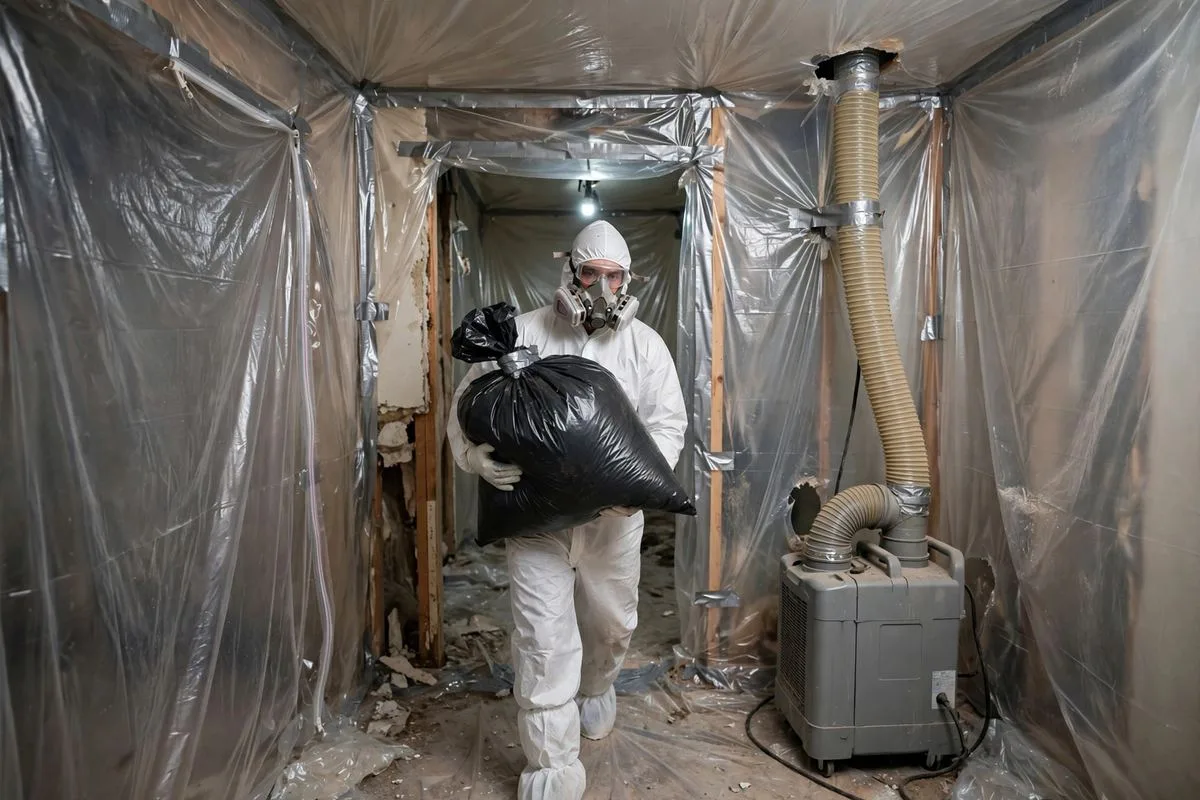
Mold remediation is the full, structured process of dealing with mold in a building, from finding the moisture source to verifying the work is complete. It follows the IICRC S520 standard, the industry standard for professional mold remediation, and it has a defined sequence: assess the problem, fix the water source, contain the work area, remove the affected materials, clean and dry the structure, and verify the result with independent clearance testing. Mold Removal Experts LA does not perform remediation itself. This site connects you with independent local providers who carry out the work, and each step below is their work, described so you know what a proper job looks like.
Remediation is wider than mold removal, and that distinction matters. Removal is one step inside remediation: the physical taking-out of growth and damaged material. Remediation is the whole job around it, including the parts a homeowner never sees, such as moisture mapping, containment, drying and verification. A job that only removes visible growth without fixing the source or verifying the result is not remediation. It is a partial cleanup, and the mold is likely to return.
What is mold remediation?
The IICRC S520 standard defines mold remediation as removing mold contamination and correcting the conditions that allowed it to grow, so the building is returned to a normal, dry state. That definition has two halves, and both are required: the removal of the contamination, and the correction of the moisture condition, whether a leak, a drainage problem, a ventilation failure or a building defect. A job that does only the first half has cleaned a symptom, not remediated anything.
In practice, remediation is a project with a beginning, a middle and a verifiable end: assessment, containment and removal, cleaning and drying, and verification by an independent check that the area is dry and the contamination has been removed. That end point is what separates remediation from an open-ended cleaning effort, and the written scope of work should describe it before the job starts.
- Assessment of the extent of growth and the moisture source
- Correction of the moisture condition that allowed growth
- Contained removal of affected materials
- Cleaning and drying of the structure
- Independent verification that the work is complete
The IICRC S520 standard, in plain language
IICRC S520 is the Standard for Professional Mold Remediation, published by the Institute of Inspection, Cleaning and Restoration Certification. It is the reference most professional providers in the United States work to, and it sets out how a remediation job should be planned, contained, executed and verified, including the safety of workers and occupants and the drying and verification steps that close the job.
You do not need to read the standard yourself. What matters is that the provider you are connected with works to it, and that the scope of work you receive reflects its structure: assessment, containment, removal, cleaning, drying and verification, in that order. If a provider proposes to skip containment, to fog instead of removing damaged materials, or to certify its own work without independent clearance, that proposal does not follow the standard.
- The industry standard for professional mold remediation in the United States
- Covers assessment, containment, removal, cleaning, drying and verification
- Protects workers and occupants as well as the building
- A scope of work should follow its sequence step by step
The remediation process, step by step
Assessment comes first. The provider inspects the affected area, takes moisture readings, and traces the water to its source. This may be an inspection alone, or an inspection plus testing if the type or extent of the growth needs to be documented. The assessment produces a written scope: what will be removed, what will be cleaned, what will be dried, and how the result will be verified. That scope is the basis for the price, and you should have it in writing before work begins.
Containment comes next: the work area is sealed off with sheeting, and filtered air equipment keeps it under negative pressure so spores are captured rather than spreading into clean rooms. Affected porous materials are removed in sealed bags, surfaces that can be saved are cleaned, and the structure is dried until moisture readings show it is dry. Finally, independent clearance testing verifies the result, and only then is the containment taken down.
- Assess: inspect, take moisture readings, trace the water source
- Contain: seal the work area and run filtered air under negative pressure
- Remove: take out affected porous materials in sealed bags
- Clean and dry: clean salvageable surfaces and dry the structure
- Verify: independent clearance testing before containment comes down
Containment and HEPA filtration
Containment is the part of remediation that most clearly separates professional work from a do-it-yourself attempt. Mold spores are microscopic, and disturbing growth releases them into the air. Without containment, that air drifts through the home and settles in rooms that were clean. Containment sheeting, sealed doorways and negative air pressure keep the work isolated, and HEPA-filtered air scrubbers capture airborne particles inside the contained area.
HEPA filtration is also used during cleaning and drying. Air scrubbers run inside the containment while work is underway and afterwards, capturing particles far smaller than the eye can see, including mold spores. The equipment is part of the standard, not a sign that the job is being overbuilt.
- Sheeting and sealed openings isolate the work area
- Negative air pressure draws air inward so spores do not escape
- HEPA air scrubbers capture airborne particles during work
- Filtration continues through cleaning and drying
Physical removal, not a cover-up
Mold remediation is physical removal, not a cover-up. Paint, sealant, fogging or a cleaning spray applied over growth does not remove it. It hides it, and the growth continues inside the material underneath, where it cannot be seen until it shows up again. Damaged porous material has to come out: the drywall, the insulation, the carpet padding that has been colonized and cannot be cleaned. That is the work, and there is no shorter version of it.
Fogging and antimicrobial treatments have a place in the process, as a step after removal and cleaning, but they are not a substitute for removal. A provider who proposes to fog a room instead of removing damaged materials is proposing a cover-up, not a remediation.
- Paint, sealant and fogging hide growth; they do not remove it
- Damaged porous material has to come out
- Fogging is a step after removal, not a substitute for it
- The scope should list what will be removed
Dry to target moisture: the completion standard
A remediation job is not finished when the materials are out and the area looks clean. It is finished when the structure is dry to its target moisture readings, and those readings are the completion standard. Fresh drywall never goes up over damp framing. Rebuilding over damp wood traps moisture inside the wall, where mold grows unseen until it appears again months later, and the second job is larger than the first would have been.
The provider measures moisture with meters that read through materials, and keeps air movers and dehumidifiers running until the readings reach the dry standard for each material. That takes time, depending on how long the area was wet and how much water the materials absorbed. Ask to see the readings before rebuilding begins.
- The job ends when moisture readings reach the target, not when it looks clean
- Fresh drywall never goes up over damp framing
- Rebuilding over damp wood traps moisture and regrows mold
- Ask to see the readings before rebuilding begins
Post-remediation verification closes the job
Remediation is not finished when the materials are out and the area looks clean. It is finished when an independent check confirms the area is dry and the contamination has been removed. That check is post-remediation verification, also called clearance testing, and it should come from a provider who did not do the remediation work.
This separation is the point. A company that certifies its own work has an interest in the result, and the result is not a meaningful check. The referral model on this site exists to make the separation practical: the remediation provider does the work, and a different independent provider verifies it. The post-remediation verification page explains the process in full, including what the verifier looks for and what happens if the result is not clear.
- Verification is the defined end point of a remediation job
- It should come from a provider who did not do the remediation
- Air or surface samples are compared with unaffected areas
- Containment comes down only after verification passes
Related pages
How a referral works
- Tell us about the mold. Where it is, how large the area looks, and whether there has been a leak or flood.
- We connect you with independent local providers. They do the inspection, testing, removal or remediation — we do not perform the work ourselves.
- The provider contacts you. They arrange the visit, explain what they found, and agree the work with you directly.
Frequently asked questions
What is mold remediation?
Mold remediation is the full process of removing mold contamination and correcting the moisture conditions that allowed it to grow, following the IICRC S520 standard. It includes assessment, containment, removal, cleaning, drying and independent verification, in that order.
How long does mold remediation take?
It depends on the size of the affected area, the materials involved and how long they have been wet. A small contained job can take a day or two; a larger job involving several rooms, structural drying and independent clearance testing takes longer. The provider who scopes the job can give a realistic timeframe after seeing it.
How is mold removed from a home?
The work area is contained with sheeting and HEPA-filtered negative air pressure, affected porous materials are removed in sealed bags, salvageable surfaces are cleaned, and the structure is dried until moisture readings show it is dry. Independent clearance testing then verifies the result.
What is the IICRC S520 standard?
IICRC S520 is the Standard for Professional Mold Remediation, published by the Institute of Inspection, Cleaning and Restoration Certification. It sets out how a professional remediation job should be assessed, contained, executed, dried and verified, and it is the reference most professional providers in the United States work to.
Do I need to leave my home during remediation?
It depends on the size of the contained area and the provider's advice. Small contained jobs often allow the rest of the home to be used normally. Larger jobs may call for staying elsewhere during the work. Ask the provider what they recommend for your specific job.
Why does remediation cost more than just cleaning the mold?
Because remediation includes work that cleaning alone does not: assessment and moisture tracing, containment and HEPA filtration, removal of damaged materials, structural drying, and independent verification. Each step is part of the standard, and skipping steps is how a job fails and the mold returns.
Can mold remediation be done without removing drywall?
Sometimes, when the growth is only on the surface of a hard, non-porous material. When mold has grown into porous materials such as drywall, insulation or carpet padding, those materials generally have to be removed, because cleaning cannot reach the growth inside them. The provider's assessment decides which applies to your job.
Request a referral
Please note: online requests are not connected yet — the request form for this domain is still being set up. Your details are not sent when you submit this form. For the fastest response, please call (945) 422-7665.
Need mold help in Los Angeles?
Tell us where the mold is and how large the area looks. We will connect you with an independent local provider.
Request a referral Call (945) 422-7665
Mold Removal Experts LA is a referral service. We do not perform mold inspection, testing, or remediation. We connect you with independent local providers who do the work.