Crawl Space Mold Remediation in Los Angeles
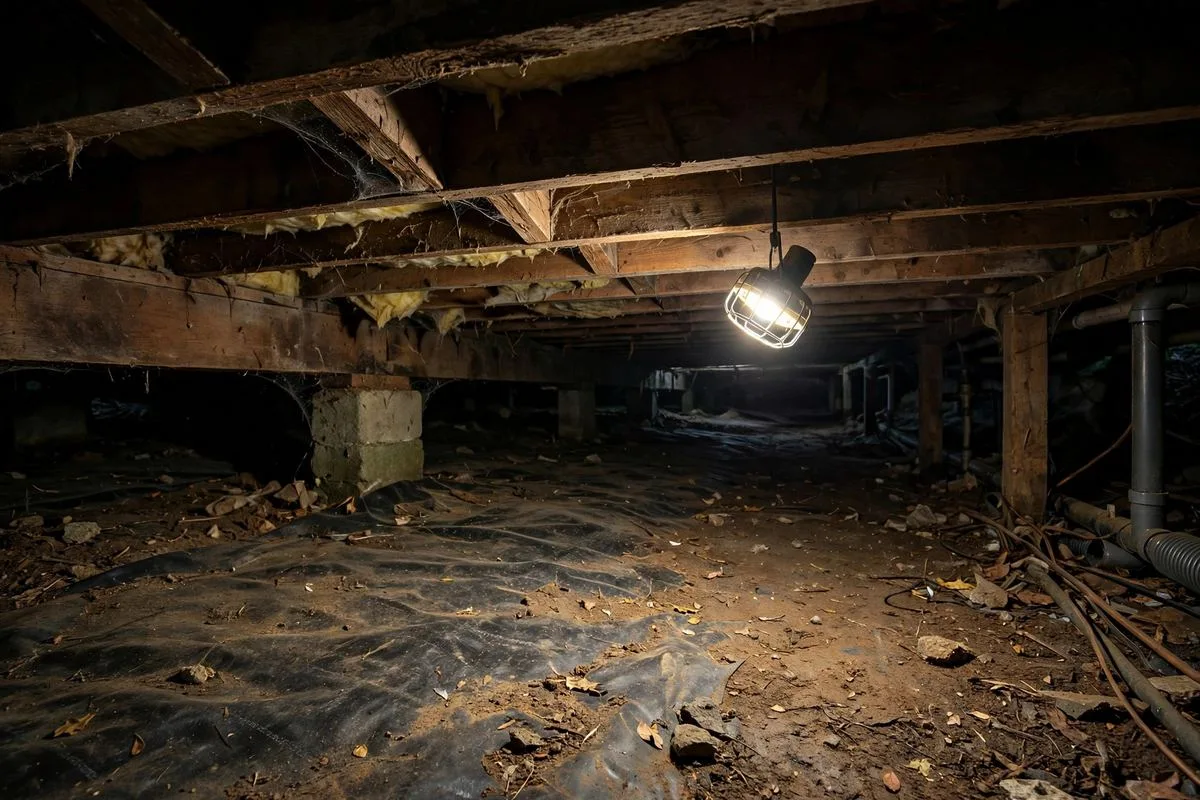
Crawl space mold remediation in Los Angeles is the treatment of mold growth in the shallow space between the ground and the floor of a raised-foundation home. The crawl space is dark, damp and rarely visited, which makes it one of the most common places for mold to grow unnoticed in Los Angeles homes. Mold Removal Experts LA does not perform crawl space work itself. This site connects you with independent local providers, and the provider who takes your job inspects the crawl space, finds the moisture source, and carries out the treatment.
Many Los Angeles homes, particularly post-war single-family homes across the San Fernando Valley and older homes on the Eastside, are built on raised foundations with a crawl space beneath. Ground moisture rises into that space, ventilation is often poor, and plumbing leaks above drip down into it. The result is damp wood: joists, subfloor and support posts that stay wet enough for mold to grow for months or years before anyone looks.
Why crawl spaces grow mold
A crawl space grows mold because it holds damp air against wood for long periods. Moisture comes from the ground itself, which releases water vapor into the space, from poor ventilation that lets that vapor accumulate, from plumbing leaks above that drip down, and from drainage that sends rainwater under the house instead of away from it. In Los Angeles, the dry climate masks the problem: the ground under a house can stay damp from a small leak or from irrigation long after the surface looks dry.
The wood in a crawl space is the food source. Joists, subfloor, rim boards and support posts are all wood, and they are all in contact with the damp air. Once growth starts on the underside of the subfloor, it spreads along the joists while the space goes unvisited. The first sign is often a musty smell in the rooms above, or a stain on the floor, and by then the growth can be extensive.
- Ground moisture rising into the space
- Poor ventilation letting damp air accumulate
- Plumbing leaks dripping down from above
- Drainage sending rainwater under the house
- Wood joists, subfloor and posts in contact with damp air
Signs of mold in a crawl space
The most common sign is a musty smell in the rooms above the crawl space, particularly in the morning or when the heating or air conditioning runs. Other signs include soft or sagging floors, stains on the floor or on the baseboards, and visible growth or staining on the joists when the space is entered. In some homes, the first sign is a home inspection before a sale, when the inspector enters the crawl space and finds the growth.
Because the space is rarely visited, the growth is often worse than the smell suggests. A provider who inspects a crawl space enters it, looks at the joists, subfloor and posts, takes moisture readings on the wood, and checks the ground, the drainage and the plumbing above. The written scope describes the extent of the growth, the moisture readings, and the likely source, and it is the basis for the treatment quote.
- Musty smell in the rooms above, especially in the morning
- Soft or sagging floors
- Stains on floors or baseboards
- Visible growth or staining on joists
- Often found first during a home inspection
How crawl space mold is treated
Crawl space mold treatment follows the same contained process as other mold remediation, adapted to a confined, low space. The provider removes any affected insulation and debris, cleans the surface growth on sound wood, and treats the wood with methods suited to the material. Wood that is rotted or structurally damaged is removed and replaced, which may be a separate contractor's work. The space is then dried with air movement and dehumidification until moisture readings on the wood show it is dry.
Containment in a crawl space is different from containment in a room, because the space is open to the rest of the house through gaps around pipes and ducts. The provider seals those openings and runs filtered air equipment so spores do not drift up into the living space. Protective equipment is essential in a crawl space, and the work is physically demanding in a confined space, which is another reason it is not a do-it-yourself job.
- Affected insulation and debris removed
- Surface growth on sound wood cleaned in place
- Rotted or damaged wood removed and replaced
- Space dried until moisture readings on the wood show it is dry
- Openings sealed so spores do not drift into the living space
Fixing the moisture source under the house
Treating the growth without fixing the moisture is a temporary job. The provider looks for the source while they are in the space: a plumbing leak above, a drainage problem sending water under the house, a missing or damaged vapor barrier on the ground, or ventilation openings that are blocked or inadequate. Each source has its own fix, and the scope of work should state which fixes are part of the provider's job and which need another trade.
A vapor barrier, a heavy sheet laid over the ground in the crawl space, is often part of the fix, because it stops ground moisture from rising into the space. Improved ventilation, or in some cases a dehumidifier sized for the space, may be part of it too. Drainage work outside the house, such as redirecting downspouts and grading the ground away from the foundation, is a separate trade's job but is often the most important fix of all.
- Plumbing leaks above the crawl space
- Drainage sending rainwater under the house
- Missing or damaged vapor barrier on the ground
- Blocked or inadequate ventilation openings
- Vapor barrier, ventilation and drainage are part of the fix
Why crawl space mold affects the whole house
The air in a crawl space does not stay there. It rises into the rooms above through gaps around pipes, ducts and the floor itself, carrying spores and the musty smell with it. That is why a crawl space problem shows up as a smell in the living room, and why treating the crawl space improves the air in the whole house. The connection between the crawl space and the living space is also why containment and filtered air matter during the work.
Crawl space mold also affects the structure of the house. Joists and subfloor that stay damp lose strength over time, and the damage can be expensive to repair if it is left for years. That is the cost-of-delay argument for crawl space work: the growth spreads while the space goes unvisited, and the structural damage grows with it. An inspection that finds the problem early is the cheaper step.
- Crawl space air rises into the rooms above
- Spores and musty smells travel with it
- Damp joists and subfloor lose strength over time
- Early inspection is the cheaper step
What affects the cost of crawl space mold treatment
No price is quoted on this site, because the cost depends on the size of the crawl space, the extent of the growth, how much wood must be removed, whether a vapor barrier and ventilation work are included, and how accessible the space is. Only the provider who has seen the crawl space can quote it. The cost guide explains the factors that move pricing for mold work generally. When you request crawl space help, ask whether the quote includes the vapor barrier and the moisture fixes, or only the treatment.
- Size of the crawl space and extent of the growth
- How much wood must be removed
- Whether a vapor barrier and ventilation work are included
- Accessibility of the space
Related pages
How a referral works
- Tell us about the mold. Where it is, how large the area looks, and whether there has been a leak or flood.
- We connect you with independent local providers. They do the inspection, testing, removal or remediation — we do not perform the work ourselves.
- The provider contacts you. They arrange the visit, explain what they found, and agree the work with you directly.
Frequently asked questions
How do I know if I have mold in my crawl space?
The most common sign is a musty smell in the rooms above, particularly in the morning. Other signs are soft or sagging floors, stains on floors or baseboards, and visible growth on the joists. A professional inspection of the crawl space, with moisture readings on the wood, confirms the extent.
Can crawl space mold be treated without removing the wood?
Often, yes, when the wood is sound and the growth is on the surface. The provider cleans the surface growth and dries the wood. Wood that is rotted or structurally damaged has to be removed and replaced. The inspection decides which applies.
What causes mold in a crawl space?
Ground moisture rising into the space, poor ventilation, plumbing leaks from above, and drainage that sends rainwater under the house. The wood in the crawl space stays damp, and mold grows on it while the space goes unvisited.
Does crawl space mold affect the air upstairs?
Yes. Air from the crawl space rises into the rooms above through gaps around pipes, ducts and the floor, carrying spores and the musty smell with it. Treating the crawl space improves the air in the whole house.
How long does crawl space mold treatment take?
It depends on the size of the space, the extent of the growth and how long the wood has been wet. A small job can take a day or two, including drying time. A larger job with wood replacement and vapor barrier work takes longer. The provider who scopes the job can give a realistic timeframe after seeing the space.
Will crawl space mold come back after treatment?
It can, if the moisture source is not fixed. Ground moisture, drainage, plumbing leaks and ventilation all have to be addressed as part of the job, or the growth will return to the same wood. The scope of work should include the moisture fix.
Request a referral
Please note: online requests are not connected yet — the request form for this domain is still being set up. Your details are not sent when you submit this form. For the fastest response, please call (945) 422-7665.
Need mold help in Los Angeles?
Tell us where the mold is and how large the area looks. We will connect you with an independent local provider.
Request a referral Call (945) 422-7665
Mold Removal Experts LA is a referral service. We do not perform mold inspection, testing, or remediation. We connect you with independent local providers who do the work.