Mold Assessment in Los Angeles
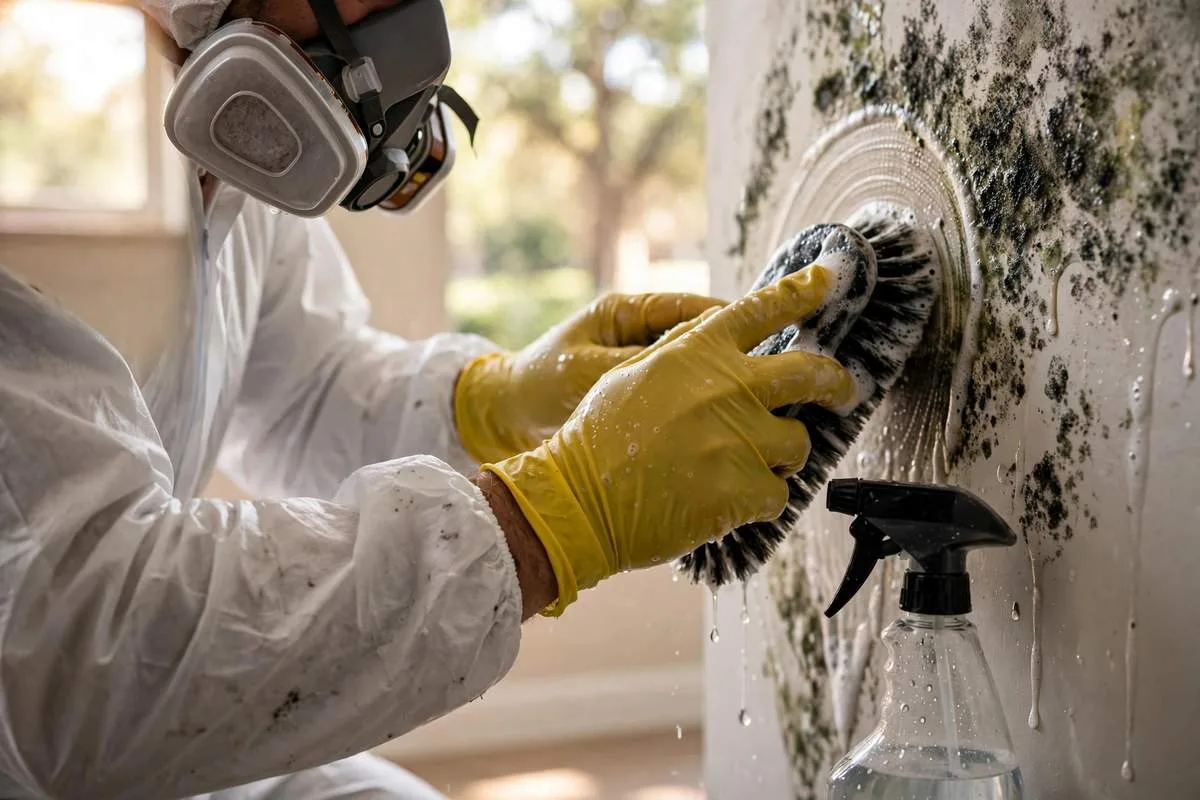
A mold assessment in Los Angeles is an expert opinion on a mold problem, delivered as a written scope of work, before any remediation is agreed. The assessor inspects the home, takes moisture readings, identifies the growth and the moisture source, and writes down what needs to be removed, what can be cleaned, what needs to be dried, and how the result will be verified. That document is the basis for every decision that follows: whether to remediate, which provider to use, what the price should be, and whether the work was done properly. Mold Removal Experts LA does not perform assessments itself. This site connects you with independent local providers, and the assessor who visits your home works for the provider, not for this site.
An assessment is different from a remediation quote. A quote is a price for a job. An assessment is an independent opinion about what the job should be. The distinction matters because a quote from the company that will do the work is not independent: the company has an interest in the size of the job it quotes. An assessment from a separate provider gives you a defined scope that any remediation provider can quote against, so the quotes you receive are comparable and the work you agree to is the work the problem actually needs.
What a mold assessment covers
The assessor starts with the problem as you describe it: where the growth is, when you first saw it, whether there has been a leak, and what has already been done. They then inspect the affected areas and the rooms around them, look for growth and water damage, and take moisture readings through walls, floors and ceilings to map how far the water spread. They identify the likely moisture source, and they note any areas that need further investigation, such as a wall cavity that could not be seen.
The assessment produces a written scope, sometimes called a protocol. It lists what will be removed, what will be cleaned, what will be dried, how the work area will be contained, and how the result will be verified. It is the document the remediation providers quote against, and it is the document the verifier checks the finished work against. Without it, each provider quotes a different job, and the work cannot be compared or verified.
- Inspection of affected areas and the rooms around them
- Moisture readings mapping how far water spread
- Identification of the likely moisture source
- Written scope: what is removed, cleaned, dried and verified
- Areas needing further investigation noted
The written scope: what it is and why it matters
The written scope is the most useful document in a mold job. It defines the work in terms anyone can check: the rooms affected, the materials to be removed, the surfaces to be cleaned, the drying standard to be reached, and the verification step that closes the job. When several remediation providers quote the same written scope, their prices can be compared fairly, because they are pricing the same work. When the work is finished, the verifier checks the finished job against the same scope, and the scope is the record of what was agreed.
Ask who wrote the scope. That question matters, because a scope written by the company that will do the remediation is not independent. A scope written by a separate assessor is. The referral model on this site exists to make that separation practical: the assessor who writes the scope is not the provider who remediates, and the verifier who checks the work is separate from both.
- Defines the work in terms anyone can check
- Lets several providers quote the same job, so prices are comparable
- Lets the verifier check the finished work against what was agreed
- Ask who wrote the scope; it should be a separate assessor
- The scope is the record of what was agreed
Assessment before a home purchase
A mold assessment before a home purchase is one of the most useful assessments there is. A buyer in Los Angeles is often deciding quickly, and the home may have had water damage, a renovation, or a period of vacancy that the seller has not disclosed. The assessor inspects the home, takes moisture readings, and documents what they find in a written scope that the buyer can use to negotiate, to plan, or to walk away from the purchase.
Renovation is a particular reason for an assessment. Renovation disturbs dormant mold: opening a wall, replacing a floor, or disturbing insulation can release growth that has been hidden for years. An assessment before the renovation starts documents the condition of the home and the moisture history, so the renovation does not become a mold discovery halfway through. The mold inspection page covers the pre-purchase inspection use case in more detail.
- Documents the condition of the home before closing
- Gives the buyer evidence to negotiate, plan or walk away
- Renovation disturbs dormant mold hidden for years
- An assessment before renovation documents the moisture history
- Moisture documentation before closing protects the buyer
Assessment for landlords, tenants and property managers
Landlords, tenants and property managers need an assessment for a different reason: documentation. A landlord needs a written scope to show a tenant what will be fixed and to compare providers on the same job. A tenant needs an independent report that holds up in a dispute, describing the growth, the moisture readings and the likely source. A property manager needs a repeatable process across many units, with the same documentation format each time.
The assessment is the document that serves all three. It is written by a separate provider, it is based on inspection and moisture readings, and it is in a form that a landlord, a housing department, an insurer or a mediator can rely on. The California tenant-rights guide on this site explains the framework in general terms, and the specifics of any situation belong to a lawyer.
- Landlords: a written scope to show the tenant and compare providers
- Tenants: an independent report that holds up in a dispute
- Property managers: a repeatable process across many units
- The assessment is based on inspection and moisture readings
- It is written in a form others can rely on
How an assessment differs from an inspection and from testing
Inspection, assessment and testing are three different services, and the distinction is worth understanding. An inspection is the visual assessment with moisture readings that finds the growth and traces its cause. An assessment takes the inspection further: it produces a written scope, or protocol, that defines the remediation work in full, so that providers can quote against it and a verifier can check against it. Testing adds laboratory analysis of air or surface samples, which identifies the types and concentrations of mold present.
In practice, an assessment often includes an inspection, and testing is added when the type of mold needs to be documented. The provider who takes your request can advise which combination fits your situation: an inspection alone, an inspection with a written scope, or an inspection with testing as well. The mold inspection and mold testing pages explain each service in full.
- Inspection: visual assessment and moisture readings
- Assessment: inspection plus a written scope defining the work
- Testing: laboratory analysis of air or surface samples
- An assessment often includes an inspection
- Testing is added when the type needs documenting
What affects the cost of a mold assessment
No price is quoted on this site, because assessment pricing depends on the size of the property, the number of affected areas, whether testing is included, and the provider who performs it. Only the provider who has discussed your job can quote it. The cost guide explains the factors that move pricing for mold work generally. When you request an assessment, ask what the written scope includes, whether testing is included or separate, and when the written report will arrive.
- Size of the property and number of affected areas
- Whether testing is included or separate
- Accessibility of attics and crawl spaces
- The written scope and report are part of the service
Related pages
How a referral works
- Tell us about the mold. Where it is, how large the area looks, and whether there has been a leak or flood.
- We connect you with independent local providers. They do the inspection, testing, removal or remediation — we do not perform the work ourselves.
- The provider contacts you. They arrange the visit, explain what they found, and agree the work with you directly.
Frequently asked questions
What is a mold assessment?
It is an expert opinion on a mold problem, delivered as a written scope of work before any remediation is agreed. The assessor inspects the home, takes moisture readings, identifies the growth and the moisture source, and writes down what needs to be removed, cleaned, dried and verified.
How is an assessment different from an inspection?
An inspection is the visual assessment with moisture readings that finds the growth and traces its cause. An assessment takes the inspection further and produces a written scope, or protocol, that defines the remediation work in full, so providers can quote against it and a verifier can check against it.
Who should write the scope of work?
A separate assessor, not the company that will do the remediation. A scope written by the remediation company is not independent, because the company has an interest in the size of the job it quotes. Ask who wrote the protocol before you agree to any work.
Do I need an assessment before buying a home?
It is worth considering when the home has had water damage, a renovation, or a period of vacancy, or when a musty smell or staining suggests a hidden problem. The assessment documents the condition of the home and the moisture history before closing, and gives the buyer evidence to negotiate, plan or walk away.
Can an assessment help with a landlord dispute?
Yes. An independent assessment report describes the growth, the moisture readings and the likely source in a form that a landlord, a housing department or a mediator can rely on. It is the document that holds up in a dispute. The specifics of any tenancy situation belong to a lawyer.
How long does a mold assessment take?
A straightforward assessment of one or two affected rooms usually takes an hour or two, and the written scope follows the visit. A larger assessment covering a whole house, several rooms, an attic and a crawl space takes longer. The provider will tell you the expected timing when they take the request.
Request a referral
Please note: online requests are not connected yet — the request form for this domain is still being set up. Your details are not sent when you submit this form. For the fastest response, please call (945) 422-7665.
Need mold help in Los Angeles?
Tell us where the mold is and how large the area looks. We will connect you with an independent local provider.
Request a referral Call (945) 422-7665
Mold Removal Experts LA is a referral service. We do not perform mold inspection, testing, or remediation. We connect you with independent local providers who do the work.