Dehumidification in Los Angeles
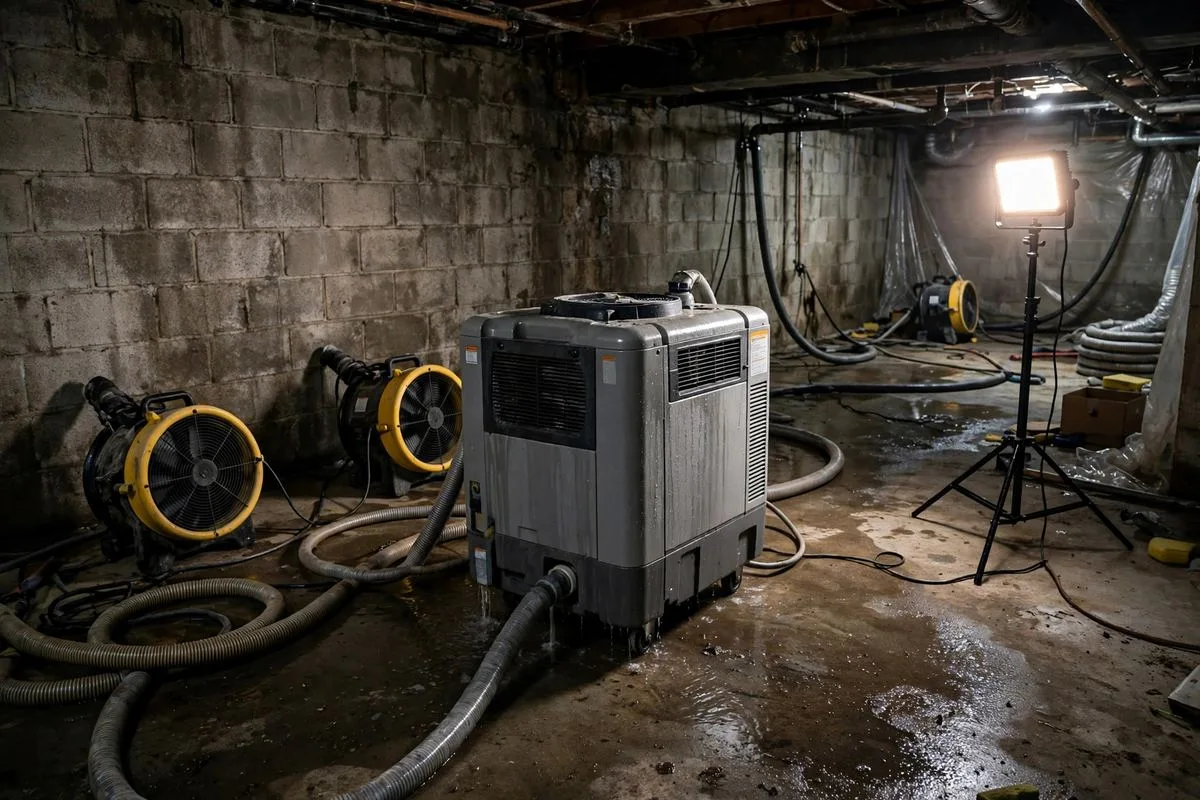
A dehumidifier is one of the most useful tools in mold work — and one of the most misunderstood. It dries air and materials, which is essential after a leak and after remediation. But it does not remove mold, it does not fix a leak, and on its own it does not solve a moisture problem. Knowing what a dehumidifier can and cannot do is the difference between a useful purchase and a wasted one.
Mold Removal Experts LA is a referral service. We do not perform the work ourselves. We connect you with independent local mold providers who use dehumidification as part of remediation and drying, and who advise on whether a dehumidifier is the right measure for your home. This page explains how dehumidification works in practice.
One practical note: place the dehumidifier where air circulates freely, away from walls and furniture, and keep the filter clean. A unit pushed into a corner with a clogged filter will run constantly and dry nothing. A clean filter also keeps the unit quieter.
What dehumidification does
A dehumidifier pulls moisture out of the air, which lowers indoor humidity and helps damp materials dry. During remediation, providers use commercial dehumidifiers and air movers to dry walls, floors, and framing after the mold has been removed — the drying step is what makes the remediation last, because mold cannot regrow on dry material.
After the work is done, a dehumidifier can keep a persistently damp space dry: a basement, a crawl space, or a room that stays humid because of coastal air or poor ventilation. In those spaces, a dehumidifier is a long-term management measure, not a one-off fix.
What a dehumidifier cannot do
A dehumidifier does not remove mold that is already growing, and it does not fix the source of the moisture. Running a dehumidifier in a room with an active plumbing leak will keep the air drier while the leak keeps wetting the wall behind it — the mold keeps growing, just a little more slowly. The same applies to a roof leak or a failed vapour barrier: the equipment manages the symptom while the cause continues.
A dehumidifier also cannot dry materials that are sealed inside a wall or under flooring on its own. Drying a wall cavity requires opening it or using directed airflow, which is part of the provider's remediation work, not something a portable unit in the room will do.
How providers use dehumidification during remediation
During a remediation job, the provider sets up commercial dehumidifiers and air movers after the affected materials have been removed and the surfaces cleaned. The equipment runs until moisture readings in the remaining materials fall to an acceptable level — the provider measures this with a moisture meter rather than guessing by time alone. Only then is the area ready for rebuilding.
The size and number of units depend on the size of the space and how wet the materials are. A single room may need one unit for a day or two; a larger job may need several units running for a week. The provider should explain the drying plan and how they will know when the area is dry.
When a dehumidifier is the right long-term measure
A dehumidifier makes sense as a long-term measure when the moisture source is humidity itself rather than a leak — for example, a coastal home where marine air keeps indoor humidity high, or a basement or crawl space that stays damp because of the soil around it. In those cases, the provider may recommend a unit sized for the space, with a drain so it does not need emptying, and placed where air circulates freely.
What matters is that the recommendation follows an assessment. A provider who recommends a dehumidifier before finding the moisture source is guessing, and the unit may end up masking a leak that should have been repaired.
What affects the cost
Dehumidification as part of a remediation job is priced with the job, and its cost depends on the size of the space and how long drying takes. A standalone dehumidifier for a home is a separate purchase, and the right size depends on the space — a unit that is too small will run constantly without lowering humidity, and a unit that is too large will cycle off before dehumidifying properly. No price can be quoted before an assessment. Our cost guide explains the factors and publishes reported market ranges from named sources.
Dehumidifiers and air conditioning: working together
A dehumidifier and an air conditioner do related but different jobs, and understanding the difference helps you use both well. An air conditioner cools the air and, as a side effect, removes some moisture — but only while it is running, and only if it runs long enough. A system that short-cycles — switching on and off in short bursts — cools the house without dehumidifying it, which is why an oversized system can leave a home feeling clammy even when it is cool.
A dehumidifier removes moisture without cooling, which makes it useful in spaces the air conditioner does not serve well — a basement, a crawl space, or a room that stays humid. Used together, the two complement each other: the air conditioner handles temperature, the dehumidifier handles humidity in the spaces that need it. The provider can advise on whether a dehumidifier is the right measure for your home, and where it should go. A dehumidifier in the wrong place — a large open room, or a space with an active leak — will run constantly and achieve little.
Related pages
How a referral works
- Tell us about the mold. Where it is, how large the area looks, and whether there has been a leak or flood.
- We connect you with independent local providers. They do the inspection, testing, removal or remediation — we do not perform the work ourselves.
- The provider contacts you. They arrange the visit, explain what they found, and agree the work with you directly.
Frequently asked questions
What size dehumidifier do I need?
It depends on the size of the space and how humid it is. A unit that is too small will run constantly without lowering humidity; a unit that is too large will cycle off before dehumidifying properly. The provider can advise on sizing after an assessment.
Should a dehumidifier drain to a sink or outside?
A continuous drain — to a sink, a floor drain, or outside — is better than a collection bucket for a permanent installation, because a full bucket shuts the unit off. The provider can advise on placement and drainage for your space.
How much does running a dehumidifier cost?
It depends on the unit's power draw and how many hours it runs. Check the energy rating before buying, and expect a unit in a damp space to run for much of the day. The provider can estimate running costs for the unit they recommend.
Can a dehumidifier replace ventilation?
No. Ventilation removes stale air and brings in fresh air; a dehumidifier removes moisture from the air that is already there. A damp room needs both — airflow and moisture removal — not one or the other.
Do dehumidifiers work in cold spaces?
Less well. Standard dehumidifiers lose efficiency in cold air, and a crawl space or garage in winter may need a unit designed for low temperatures. The provider can advise on the right type for the space.
How do I know if my dehumidifier is working?
Check the humidity with a hygrometer — it should fall over a few days — and check that the unit is collecting water. If the humidity does not fall, the unit may be too small, or the moisture source may be a leak rather than humidity.
Request a referral
Please note: online requests are not connected yet — the request form for this domain is still being set up. Your details are not sent when you submit this form. For the fastest response, please call (945) 422-7665.
Need mold help in Los Angeles?
Tell us where the mold is and how large the area looks. We will connect you with an independent local provider.
Request a referral Call (945) 422-7665
Mold Removal Experts LA is a referral service. We do not perform mold inspection, testing, or remediation. We connect you with independent local providers who do the work.