Moisture Control in Los Angeles
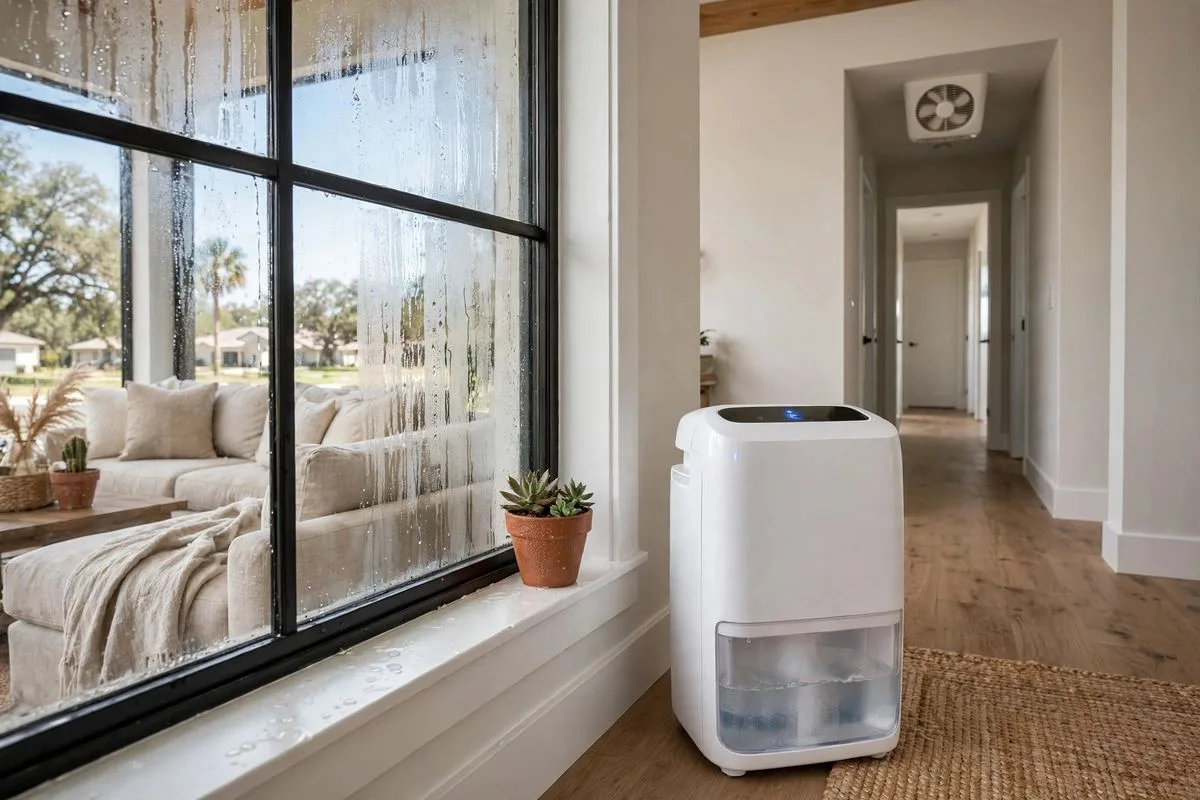
Mold is a moisture problem before it is a mold problem. Every mold job starts with water — a leak, condensation, or damp air — and every lasting fix starts with controlling that moisture. Removing mold without controlling the moisture that fed it is a short-term fix, which is why moisture control is a service in its own right, not just a step inside remediation.
Mold Removal Experts LA is a referral service. We do not perform the work ourselves. We connect you with independent local mold providers who assess moisture problems, identify the sources, and carry out the control measures. This page explains where moisture comes from in LA homes and what controlling it involves.
One measure that is easy to overlook: the clothes dryer. A dryer that vents into the house, or whose vent is disconnected, pumps warm, moist air straight into the living space. Check that the dryer vents outside and that the vent hose is intact — it is a five-minute check that removes a surprising amount of moisture from a home. The same applies to a bathroom fan that vents into the attic rather than outside: it moves the moisture, it does not remove it. Check the vent hose for kinks or crushing behind the dryer, too.
Where moisture comes from in Los Angeles homes
Los Angeles is dry for much of the year, which makes the moisture sources easy to overlook. The main ones are leaks — plumbing, roof, and appliance lines — and condensation, which forms when warm, humid air meets a cool surface. Coastal areas add humidity from marine air, especially in the mornings, and Valley homes add air-conditioning condensation in the summer.
Inside the home, everyday activities add moisture too: showers, cooking, and drying laundry indoors. In a well-ventilated home, that moisture leaves through fans and open windows. In a home with a weak bathroom fan, sealed windows, and no airflow in the attic or crawl space, it stays — and it condenses on the coolest surfaces it can find.
How providers assess a moisture problem
A moisture assessment is an inspection focused on water rather than on visible mold. The provider measures moisture in walls, floors, and framing, checks relative humidity in the rooms, looks at ventilation in bathrooms, attics, and crawl spaces, and traces any dampness to its source — a leak, a drainage problem, or condensation.
The result is a plain explanation of where the moisture is coming from and what would stop it. That may be a repair, such as fixing a leak or a gutter; a ventilation change, such as a better bathroom fan; or equipment, such as a dehumidifier in a damp space. The provider should separate the measures that fix the source from the ones that only manage the symptoms.
Common moisture control measures
The right measures depend on the source, and a provider should not recommend equipment before identifying it. The measures providers commonly use include:
- Fixing the leak — plumbing, roof, or appliance — that is feeding the dampness
- Improving ventilation in bathrooms, kitchens, attics, and crawl spaces
- Correcting grading and drainage so rainwater runs away from the foundation
- Repairing gutters and downspouts that dump water against the house
- Sealing air leaks that let humid air into wall cavities and attics
- Using a dehumidifier in a persistently damp space, such as a basement or crawl space
Moisture control after remediation
Moisture control is also the follow-up to remediation. Once mold has been removed and the area dried, the provider should explain what would keep it from returning — and that explanation is usually about moisture, not about mold. A bathroom that grows mold because the fan is weak needs a better fan, not another cleaning. A crawl space that stays damp needs ventilation or a vapour barrier, not another round of treatment.
Providers in our network are expected to explain the moisture side of the job plainly, including when a measure is outside their scope — a roofer for a roof repair, a plumber for a pipe — so you can arrange the right trade for the right fix.
What affects the cost
Moisture control ranges from a single repair to a combination of measures across the home, and the scope depends entirely on what the assessment finds. A fan replacement is a small job; drainage correction and crawl-space work are larger ones. No price can be quoted before an assessment. Our cost guide explains the factors that move a quote and publishes reported market ranges from named sources.
A seasonal moisture checklist for Los Angeles homes
Los Angeles moisture problems follow the seasons, and a short checklist twice a year catches most of them. Before the winter rains: clean the gutters and check the downspouts, walk the roofline for damaged flashing or missing tiles, check the grading around the house so water runs away from the foundation, and look at the stucco for cracks. After the rains: check the ceilings for new stains, look under sinks for drips, check the attic for dampness, and look at the crawl space if the house has one.
In summer, the checklist changes: check the air-conditioning condensate drain, change the filter, look for water in the drain pan, and watch for condensation on ducts in the attic. In a coastal home, watch for morning humidity and keep bathroom fans working. None of these checks takes long, and each one catches a problem while it is still small. A provider who does a moisture assessment can walk through the checklist with you and show you what to look for in your own home.
Related pages
How a referral works
- Tell us about the mold. Where it is, how large the area looks, and whether there has been a leak or flood.
- We connect you with independent local providers. They do the inspection, testing, removal or remediation — we do not perform the work ourselves.
- The provider contacts you. They arrange the visit, explain what they found, and agree the work with you directly.
Frequently asked questions
What is the ideal indoor humidity level?
The EPA recommends keeping indoor humidity below 60 percent, and ideally between 30 and 50 percent. Above 60 percent, condensation and mold growth become much more likely, especially on cool surfaces.
How can I check my home's humidity?
With a hygrometer, an inexpensive device sold at hardware stores, or with the humidity reading on a modern thermostat. The provider measures humidity during an assessment and can tell you whether your readings are in the range that feeds mold.
Do bathroom exhaust fans really help?
Yes, if they are vented outside and run during and after a shower. A fan that vents into the attic, or a weak fan that is never switched on, does nothing — and bathroom steam is one of the most common moisture sources in LA homes.
What is a vapour barrier, and where is it used?
A sheet of plastic laid over the ground in a crawl space to stop moisture rising from the soil into the space above. It is a standard measure for damp crawl spaces, and it works alongside ventilation rather than replacing it.
Can landscaping cause moisture problems?
Yes. Soil graded toward the house, sprinklers spraying the walls, and planters against the foundation all push water toward the building. Correcting the grading so water runs away from the house is one of the simplest moisture control measures there is.
How often should gutters be cleaned in Los Angeles?
At least once a year, before the winter rains. A clogged gutter dumps rainwater against the wall and foundation instead of carrying it away, and that water is a direct moisture source for the rooms inside.
Request a referral
Please note: online requests are not connected yet — the request form for this domain is still being set up. Your details are not sent when you submit this form. For the fastest response, please call (945) 422-7665.
Need mold help in Los Angeles?
Tell us where the mold is and how large the area looks. We will connect you with an independent local provider.
Request a referral Call (945) 422-7665
Mold Removal Experts LA is a referral service. We do not perform mold inspection, testing, or remediation. We connect you with independent local providers who do the work.