Emergency Mold Removal in Los Angeles
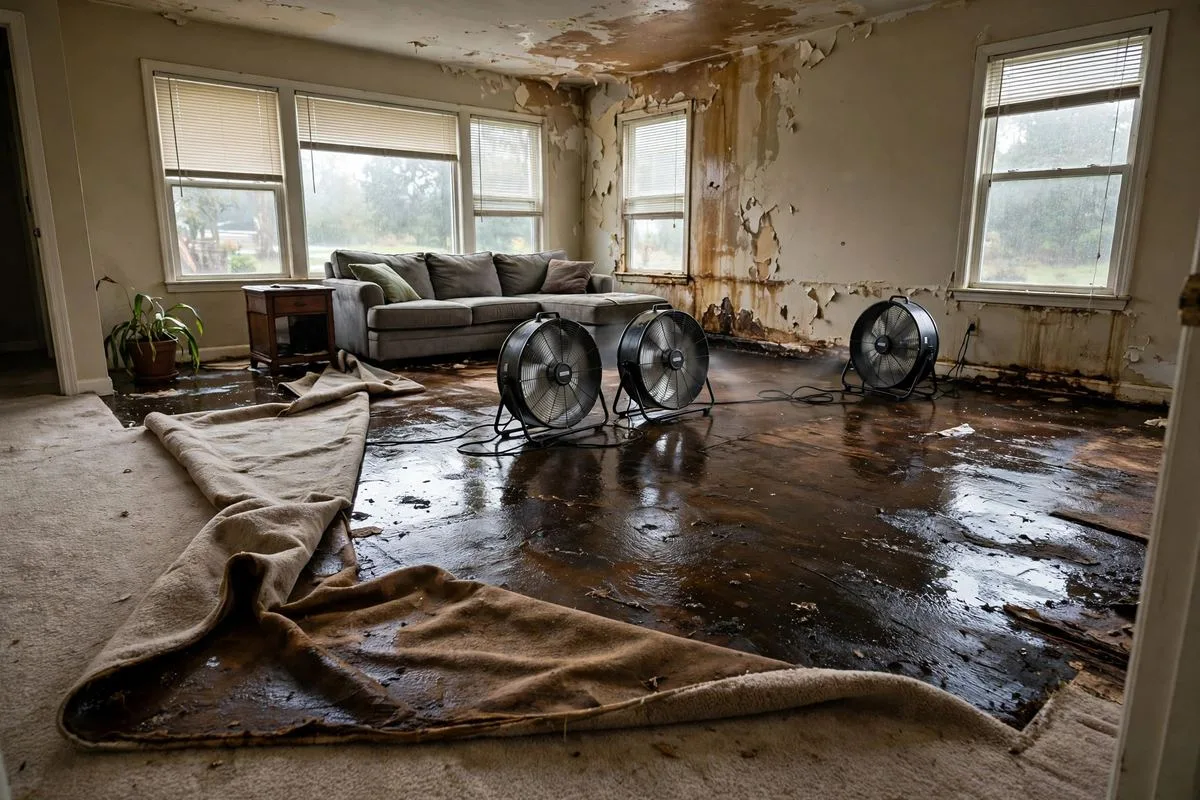
Emergency mold removal in Los Angeles is urgent help after an event that has soaked a home and created an immediate mold risk: a burst pipe, a flood, a sewage backup, or a major leak that is still running. The urgency is about the water, not only about the mold. Mold can begin growing within 24 to 48 hours on damp materials, so the first day or two after water damage matter more than any later step. Mold Removal Experts LA does not perform emergency work itself. This site connects you with independent local providers, and the provider who takes your request arranges the urgent response. No response time is promised on this site, because response times depend on the provider, the time of day, and the scale of the event, and only the provider can say when they can reach you.
An emergency request is handled differently from a routine request. The first questions are about the water: is it still running, can it be stopped safely, is it clean water or sewage, and how much of the home is affected. Those answers decide the first step, which is usually stopping the water and removing standing water, before any mold work begins. A provider cannot remediate mold in a home that is still flooding.
What counts as a mold emergency
A burst pipe that has soaked floors and walls is an emergency, because the water is spreading and the materials are getting wetter by the hour. A flood, whether from heavy rain, a failed drain or water entering from outside, is an emergency for the same reason. A sewage backup is an emergency because the water is contaminated and the health risk is higher. A major roof leak during a storm, with water coming through the ceiling, is an emergency while the rain continues.
Visible mold on its own, without an active water event, is usually not an emergency in the same sense. It is a problem that needs professional help, and it should not be left for months, but it does not require the same immediate response as a home that is actively flooding. The provider who takes your request will tell you honestly which category your situation falls into, and what the first step should be.
- Burst pipe with water still spreading
- Flood from rain, failed drain or water entering from outside
- Sewage backup, where the water is contaminated
- Major roof leak during a storm with water coming through
- Visible mold alone, without active water, is urgent but not the same emergency
What to do first, before help arrives
Stop the water if you can do so safely. Turn off the main water supply if a pipe has burst, and turn off the electricity to affected areas if water is near outlets or appliances. Do not wade into standing water that may be contaminated or electrically live. Move valuables and electronics out of the wet area if you can do so safely, and take photos of the damage for your records and for any insurance claim.
Do not disturb visible mold growth, and do not run fans or air conditioning that could spread spores from a contaminated area into clean rooms. If the water is sewage, keep everyone out of the affected area and do not attempt to clean it yourself. Open windows and doors in unaffected areas for ventilation only if it is safe to do so. Then request help, and describe the water event clearly: what happened, when it started, whether the water is still running, and how much of the home is affected.
- Stop the water safely, and turn off electricity to affected areas
- Do not wade into water that may be contaminated or electrically live
- Move valuables out and take photos for your records
- Do not disturb visible mold or run fans that spread spores
- Keep everyone out of a sewage-affected area
How urgent help is arranged
When you submit an emergency request, the information goes to an independent local provider who can handle urgent water and mold work. The provider contacts you to confirm the situation and to discuss when they can reach you. They may ask for photos, the address, whether the water is stopped, and whether anyone in the household needs the area cleared for health reasons. That conversation decides the first visit, and the provider will tell you plainly what they can do and when.
The first visit is usually about the water, not the mold. The provider removes standing water, checks how far the water spread, and starts drying the structure. Mold work follows once the area is dry enough to assess, because remediation cannot succeed while the materials are still wet. The scope of work for the mold removal is agreed after that assessment, and independent clearance testing can verify the result at the end.
- An independent local provider contacts you to confirm the situation
- Photos, water status and the extent of the damage decide the first visit
- The first visit is usually about stopping water and starting drying
- Mold work follows once the area is dry enough to assess
- No response time is promised; the provider tells you when they can reach you
Mold after a burst pipe or flood
Mold after a burst pipe or a flood is the most time-sensitive mold problem, because the materials have been soaked through and the growth can start within a day or two. Drywall, insulation, carpet padding and wood that have been saturated are the materials most at risk. The provider's first job is to find how far the water went, including inside wall cavities and under flooring, because the visible wet area is usually smaller than the actual affected area.
Drying is the critical step after a flood or a burst pipe. Air movers and dehumidifiers run until moisture readings show the structure is dry, and that takes time. Materials that cannot be dried, such as saturated insulation and carpet padding, are removed. The water-damage mold cleanup page explains the drying and cleanup process in more detail, and the mold prevention page covers the first steps to take in the first day or two after water damage.
- Mold can begin growing within 24 to 48 hours on damp materials
- Water spreads inside walls and under flooring beyond the visible area
- Saturated insulation and carpet padding are usually removed
- Drying continues until moisture readings show the structure is dry
- Remediation follows once the area is dry enough to assess
Sewage and contaminated water
A sewage backup is handled differently from clean water damage, because the water is contaminated. The affected materials are treated as contaminated, and the cleanup follows stricter procedures: containment, protective equipment, removal of affected porous materials, and thorough cleaning and disinfection of the surfaces that remain. This is not a job for a homeowner, and it is not a job for a general handyman. It needs a provider who handles contaminated water work.
If you have a sewage backup, keep everyone out of the affected area, do not attempt to clean it yourself, and describe it clearly when you request help, so the provider who responds is one who handles contaminated water. The provider will explain the scope and the precautions in their own terms before work begins.
- Sewage water is contaminated and handled with stricter procedures
- Affected porous materials are removed under containment
- Surfaces that remain are cleaned and disinfected
- Keep everyone out of the affected area
- Describe the backup clearly so the right provider responds
What emergency help does not promise
This site promises no response time, no arrival time, and no promised turnaround time, because those depend on the provider and the circumstances, and this site does not control them. A provider who promises a specific arrival time without knowing your situation is guessing. The honest arrangement is the one on this page: you describe the emergency, a provider contacts you, and the provider tells you plainly when they can reach you and what they will do first.
The same honesty applies to the work itself. Emergency help stabilizes the situation: it stops the water, removes standing water, and starts drying. It does not finish the whole job in one visit. Remediation, drying and verification take the time they take, and the provider will explain the sequence before work begins.
- No response time or arrival time is promised on this site
- The provider tells you plainly when they can reach you
- The first visit stabilizes the situation: water stopped, drying started
- Remediation and verification follow in sequence
Related pages
How a referral works
- Tell us about the mold. Where it is, how large the area looks, and whether there has been a leak or flood.
- We connect you with independent local providers. They do the inspection, testing, removal or remediation — we do not perform the work ourselves.
- The provider contacts you. They arrange the visit, explain what they found, and agree the work with you directly.
Frequently asked questions
What counts as a mold emergency?
A burst pipe, a flood, a sewage backup, or a major roof leak with water still coming in. The urgency is about the water: mold can begin growing within 24 to 48 hours on damp materials, so the first day or two matter most. Visible mold alone, without an active water event, is urgent but not the same kind of emergency.
What should I do first after a burst pipe?
Stop the water safely, turn off electricity to affected areas, and do not wade into water that may be contaminated or electrically live. Move valuables out if you can do so safely, take photos, and do not disturb visible mold. Then request help and describe what happened, when it started, and whether the water is still running.
How quickly can a provider reach me?
It depends on the provider, the time of day and the scale of the event, and only the provider can say when they can reach you. No response time is promised on this site. When you request help, the provider contacts you and tells you plainly when they can arrive and what they will do first.
Is sewage backup a mold emergency?
Yes, and it is handled differently from clean water damage, because the water is contaminated. Keep everyone out of the affected area and do not attempt to clean it yourself. Describe the backup clearly when you request help, so the provider who responds handles contaminated water work.
Can mold be removed on the day of a flood?
Usually not. The first step after a flood is stopping the water and drying the structure, which takes time. Mold work follows once the area is dry enough to assess. A provider who promises to finish everything in one visit is skipping the drying step the job depends on.
What should I tell the provider when I request emergency help?
What happened, when it started, whether the water is still running, whether it is clean water or sewage, and how much of the home is affected. Photos help. The more the provider knows before they arrive, the faster the first visit can be useful.
Request a referral
Please note: online requests are not connected yet — the request form for this domain is still being set up. Your details are not sent when you submit this form. For the fastest response, please call (945) 422-7665.
Need mold help in Los Angeles?
Tell us where the mold is and how large the area looks. We will connect you with an independent local provider.
Request a referral Call (945) 422-7665
Mold Removal Experts LA is a referral service. We do not perform mold inspection, testing, or remediation. We connect you with independent local providers who do the work.