Black Mold Removal in Los Angeles
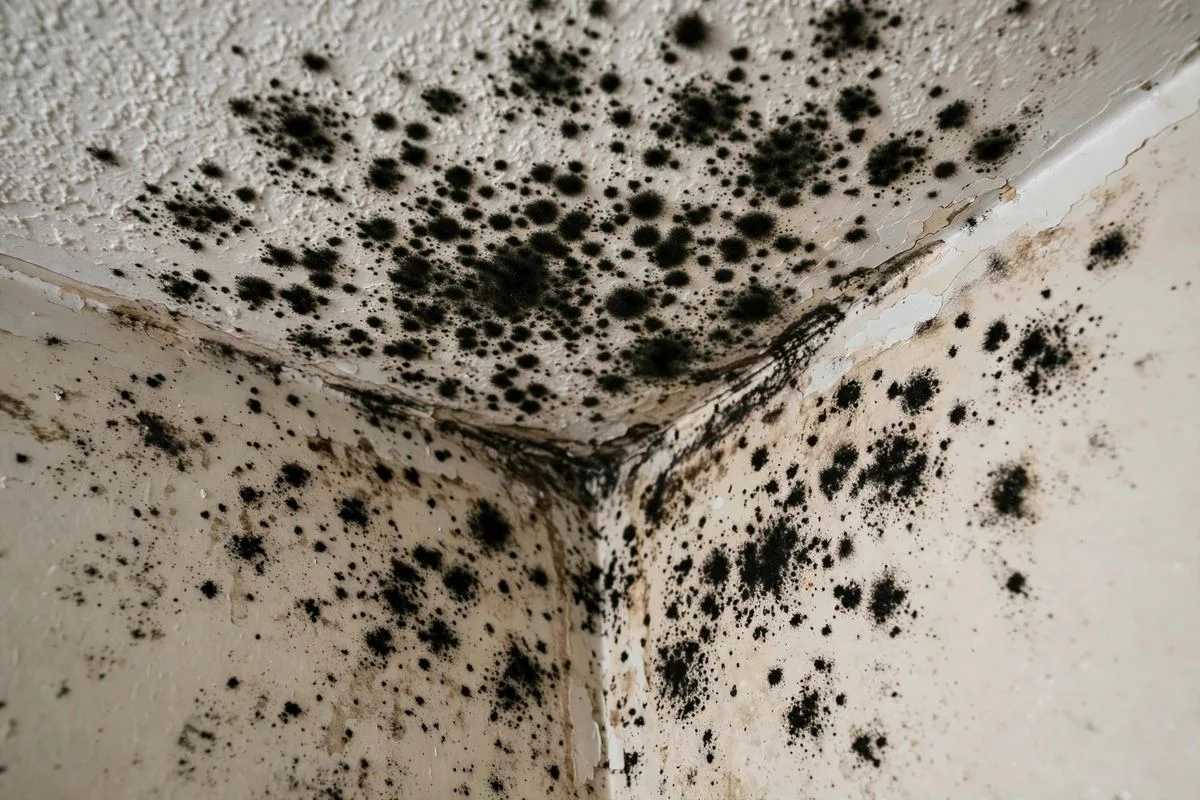
Black mold removal in Los Angeles is the contained remediation of dark mold growth, most often Stachybotrys chartarum, found on drywall, wood and other cellulose-rich materials that have stayed wet. The growth is dark green to black, slimy when wet, and it appears where water has soaked into drywall or wood for a sustained period: behind a leaking shower, under a slow plumbing leak, or on a wall that stayed damp after a roof leak. Mold Removal Experts LA does not perform this work itself; this site connects you with independent local providers.
Color alone does not identify black mold. Many molds look dark, and Stachybotrys can only be confirmed by laboratory analysis of a sample. That matters because the scope of work, and the documentation a landlord or insurer may need, depends on knowing what is actually growing.
How to tell if mold is black mold
Stachybotrys chartarum grows on materials rich in cellulose, such as drywall, wood, paper and ceiling tiles, that have stayed wet for a sustained period. It is dark green to black, and slimy or wet while the material is damp, most often on drywall behind a leak or wood framing that stayed wet. It does not usually grow on hard, non-porous surfaces such as tile or glass.
Those features are clues, not a diagnosis. Other molds, including several Aspergillus and Cladosporium species, can also look dark, and they grow in many of the same places. Visual identification alone cannot distinguish them; only laboratory analysis of an air or surface sample can confirm Stachybotrys.
- Grows on cellulose-rich materials: drywall, wood, paper, ceiling tiles
- Dark green to black, slimy while the material is damp
- Found where water soaked in for a sustained period
- Color alone cannot confirm it; laboratory analysis is needed
- Other dark molds grow in the same places
Is all black mold toxic?
No. Not all mold that looks black is toxic, and not all Stachybotrys produces the same concern in every situation. The term toxic mold is a popular label, not a scientific classification. Stachybotrys chartarum can produce mycotoxins under certain conditions, which is why it is handled with containment and protective equipment, but dark growth alone does not establish a health risk, and no mold test can tell you whether a particular person will have a health effect.
The EPA and CDC both state that mold should be removed regardless of type, because any mold growth indicates a moisture problem, and because some people are sensitive to mold. Neither agency classifies household mold by toxicity for deciding whether to remove it. Health questions about mold exposure belong to a doctor, not to a mold website or a remediation provider.
- Toxic mold is a popular label, not a scientific classification
- Stachybotrys can produce mycotoxins under certain conditions
- Dark growth alone does not establish a health risk
- The EPA and CDC advise removing mold regardless of type
- Health questions belong to a doctor
Can black mold kill you?
The honest, factual answer is that deaths directly caused by mold exposure in a home are extremely rare, and the EPA and CDC do not describe household mold as a common cause of death. That does not mean black mold should be ignored: mold exposure can cause respiratory symptoms, allergic reactions and irritation, particularly in people with asthma, allergies or weakened immune systems, and the CDC notes that people with those conditions should avoid mold exposure and seek medical advice if they have symptoms.
The right response to black mold is therefore practical, not panicked: have it identified, have it removed under containment by a provider, fix the moisture source, and verify the work. If anyone in the household has symptoms they believe are related to mold, they should speak to a doctor. This site gives factual information from the EPA and CDC and does not offer medical advice.
- Deaths directly caused by household mold exposure are extremely rare
- Mold exposure can cause respiratory symptoms and allergic reactions
- People with asthma, allergies or weakened immune systems should avoid exposure
- The right response is identification, contained removal and a moisture fix
- Symptoms believed related to mold should be discussed with a doctor
How black mold is removed safely
Black mold is removed under containment, following the same IICRC S520 process as other mold remediation, because the handling does not depend on the species. The work area is sealed off with sheeting, filtered air equipment keeps it under negative pressure, affected porous materials are removed in sealed bags, surfaces that can be saved are cleaned, and the structure is dried until moisture readings show it is dry. Independent clearance testing then verifies the result.
What differs with Stachybotrys is the emphasis on not disturbing the growth before containment is in place. Dry Stachybotrys releases spores and fragments readily when disturbed, so the growth should not be scrubbed, scraped or sprayed before the provider arrives. Leave it alone, and let the provider set up containment first and fix the moisture source, because Stachybotrys returns to the same place if the water remains.
- Containment with sheeting and HEPA-filtered negative air pressure
- Affected drywall and insulation removed in sealed bags
- Salvageable surfaces cleaned; structure dried to verified readings
- Do not scrub, scrape or spray the growth before the provider arrives
- The moisture source is fixed as part of the job
Why black mold keeps returning
Black mold returns when the water that fed it is still there. Stachybotrys needs sustained wetness on cellulose-rich material, so its return is a reliable sign that the moisture source was not fixed: a shower that still leaks behind the wall, a roof that still lets rain in, a supply line that still seeps, or a room that stays humid because ventilation was never fixed.
A provider who handles a black mold job properly traces the moisture first and either fixes it or tells you plainly what needs fixing by another trade. That is part of the scope of work, and it should be in writing before the job starts. After the work, prevention matters: fixing leaks promptly, ventilating bathrooms and kitchens, and acting in the first day or two after any water damage.
- Stachybotrys needs sustained wetness on cellulose-rich material
- Return growth means the moisture source was not fixed
- The source may be a leak, a roof failure or a ventilation problem
- The moisture fix should be in the written scope
- Prevention after the job keeps it from returning
Common mold types: what each one grows on and what it signals
Several mold types are commonly found in Los Angeles homes, and each one grows in different conditions and signals something different about the moisture in the building. Stachybotrys chartarum, the mold most often called black mold, grows on cellulose-rich materials such as drywall, wood and paper that have stayed wet for a sustained period, and it signals long-term water intrusion. Chaetomium grows in similar conditions, on drywall and wood wet for a long time, and it also signals sustained water damage, often after a leak that went unnoticed.
Aspergillus is one of the most common indoor molds, growing on damp walls, ceilings, insulation and dust, and it signals ongoing dampness rather than a single event. Penicillium is also common, growing on damp wallpaper, fabrics, carpet and insulation, often where condensation or a small leak keeps a surface damp. Fusarium grows on damp building materials and in water-damaged areas, and it signals prolonged wetness. The EPA and CDC advise removing mold regardless of type, and laboratory analysis is the only way to confirm which type is present. Health questions about any mold exposure belong to a doctor.
- Stachybotrys: drywall and wood wet for a sustained period
- Chaetomium: drywall and wood wet for a long time
- Aspergillus: damp walls, ceilings and insulation; signals ongoing dampness
- Penicillium: damp wallpaper, fabrics and carpet; signals condensation or a small leak
- Fusarium: damp building materials and water-damaged areas; signals prolonged wetness
- The EPA and CDC advise removing mold regardless of type
What affects the cost of black mold removal
No price is quoted on this site, because the cost depends on the size of the affected area, the materials involved, whether testing is included, and the provider who performs the work. Only the provider who has seen the job can quote it. The factors that move the price are the same as for other mold remediation: the area affected, the number of rooms, how long the materials have been wet, and whether containment, drying and clearance testing are in the scope.
- Size of the affected area and number of rooms
- Materials affected, usually drywall and wood
- Whether testing is included in the scope
- Containment, drying and independent clearance testing
Related pages
How a referral works
- Tell us about the mold. Where it is, how large the area looks, and whether there has been a leak or flood.
- We connect you with independent local providers. They do the inspection, testing, removal or remediation — we do not perform the work ourselves.
- The provider contacts you. They arrange the visit, explain what they found, and agree the work with you directly.
Frequently asked questions
What kills black mold permanently?
Professional remediation removes black mold by taking out the affected materials under containment, cleaning what can be saved, and drying the structure. Whether it stays gone depends on fixing the moisture source that fed it. If the leak, roof failure or ventilation problem remains, the mold will return to the same place. Permanent results come from removal plus a moisture fix, verified by independent clearance testing, not from any single cleaning product.
Can black mold kill you?
Deaths directly caused by household mold exposure are extremely rare, and the EPA and CDC do not describe household mold as a common cause of death. Mold exposure can cause respiratory symptoms and allergic reactions, particularly in people with asthma, allergies or weakened immune systems. If you have symptoms you believe are related to mold, speak to a doctor.
How do I get rid of black mold?
Have it identified, then have it removed under containment by a provider, with the moisture source fixed and the work verified by independent clearance testing. Do not scrub, scrape or spray the growth before the provider arrives, because disturbing it can spread spores into the air.
Is all black mold toxic?
No. Toxic mold is a popular label, not a scientific classification. Stachybotrys chartarum can produce mycotoxins under certain conditions, but dark growth alone does not establish a health risk, and the EPA and CDC advise removing mold regardless of type. Health questions belong to a doctor.
How can I tell if mold is black mold?
Stachybotrys grows on cellulose-rich materials that stayed wet, and it is dark green to black and slimy while damp. But color alone cannot confirm it, because other molds also look dark. Only laboratory analysis of a sample can confirm Stachybotrys.
Should I stay in the house during black mold removal?
It depends on the size of the contained area and the provider's advice. Small contained jobs often allow the rest of the home to be used normally. Larger jobs may call for staying elsewhere during the work. Ask the provider what they recommend for your specific job.
Does bleach kill black mold?
The EPA notes that bleach can clean surface mold on hard, non-porous materials, but it does not reach mold growing inside porous materials such as drywall, and it does not fix the moisture source. For growth in drywall or wood, professional removal under containment is the appropriate response.
Request a referral
Please note: online requests are not connected yet — the request form for this domain is still being set up. Your details are not sent when you submit this form. For the fastest response, please call (945) 422-7665.
Need mold help in Los Angeles?
Tell us where the mold is and how large the area looks. We will connect you with an independent local provider.
Request a referral Call (945) 422-7665
Mold Removal Experts LA is a referral service. We do not perform mold inspection, testing, or remediation. We connect you with independent local providers who do the work.