Mold Services in Los Angeles
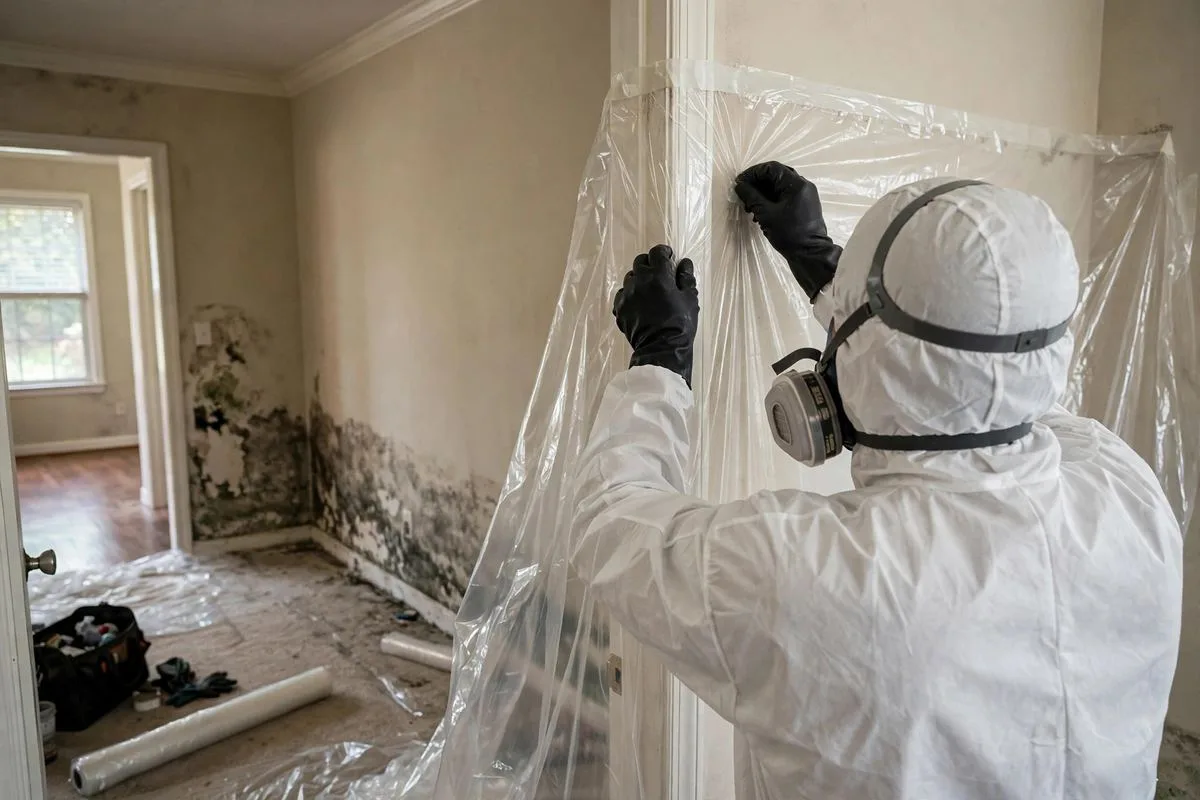
This site connects Los Angeles customers with independent local providers for every stage of mold work, from the first inspection to the final clearance test. Each service below has its own page explaining what it covers, when it is needed, and how it fits into the wider process. This site does not perform mold work itself; it is a referral service, and the provider who takes your job performs the work.
The services fall into a natural order. Inspection and assessment come first, when the problem needs to be found and understood. Testing adds sampling and laboratory analysis when the type or extent needs documenting. Removal and remediation are the contained cleanup, and post-remediation verification closes the job with an independent check.
Core services: find it, remove it, verify it
The core sequence is the same for most jobs. An inspection identifies the growth, traces the moisture that caused it, and produces a written scope. Testing is added when sampling and laboratory analysis are needed, for example when the growth is hidden, when a landlord or insurer needs documentation, or when a home sale is involved. Removal and remediation are the contained cleanup, carried out to the IICRC S520 standard. Verification is the independent clearance test that confirms the work is complete.
Keeping these steps with separate providers matters. The IICRC S520 standard treats inspection, remediation and clearance as separate functions, because a company that finds the problem, sells the fix and certifies its own work has no independent check. Each service page below explains its own part of that sequence.
- Mold inspection: visual assessment, moisture mapping, written scope
- Mold testing: air and surface sampling with laboratory analysis
- Mold assessment: an expert opinion before work is agreed
- Mold removal and remediation: contained cleanup to the IICRC S520 standard
- Post-remediation verification: independent clearance testing after the work
Services by room and area
Mold behaves differently in different parts of a home, and each area has its own causes and process. Attic mold usually traces to roof leaks or poor ventilation. Crawl space mold traces to ground moisture and poor air movement. Bathroom mold traces to ventilation and plumbing. Black mold needs its own handling, because identification matters before any work begins.
The room and area pages below cover each of these in detail, with the causes that are common in Los Angeles homes, the signs to look for, and the process a provider follows. They link back to the core services where the wider process is explained, so the same explanation is not repeated on every page.
- Attic mold inspection and removal
- Crawl space mold treatment
- Bathroom mold removal
- Black mold remediation
- Water-damage mold cleanup
- Emergency mold removal after a burst pipe or flood
Services by property type
The person asking for help is not always the homeowner. Landlords need mold help that produces documentation a tenant dispute or a housing complaint may require. Property managers need a repeatable process across many units. Home buyers and sellers need an inspection and a clear scope before a transaction closes. Commercial properties need work scheduled around tenants and operations, with documentation for insurers and building managers.
The referral network includes providers who work with each of these situations: commercial remediation for offices, retail and multi-unit buildings, residential removal for homes and apartments, and the documentation each situation needs.
- Residential mold removal for homes, condominiums and apartments
- Commercial mold remediation for offices, retail and multi-unit buildings
- Landlord and property management mold help
- Real estate transaction mold inspection
Prevention and moisture control
The cheapest mold job is the one that never happens. Prevention is moisture control: fixing leaks promptly, ventilating bathrooms and kitchens, and acting in the first day or two after water damage. The mold prevention page covers the practical steps.
Prevention is also part of every remediation job. A provider who removes mold without fixing the moisture source has done a partial job, and the growth will return. That is why every core service page on this site explains the moisture source as part of the work, and why the prevention page is a service in its own right rather than an afterthought.
- Moisture control and ventilation
- Dehumidification for damp areas
- First steps in the first 24 to 48 hours after water damage
- Hidden mold detection when the source is not visible
Explore
Related pages
How a referral works
- Tell us about the mold. Where it is, how large the area looks, and whether there has been a leak or flood.
- We connect you with independent local providers. They do the inspection, testing, removal or remediation — we do not perform the work ourselves.
- The provider contacts you. They arrange the visit, explain what they found, and agree the work with you directly.
Frequently asked questions
What mold services are available in Los Angeles?
Inspection, testing, assessment, removal, remediation, black mold remediation, attic and crawl space work, bathroom mold removal, water-damage mold cleanup, emergency help, commercial and residential work, post-remediation verification, and mold prevention. Each service has its own page on this site, linked below.
Do I need an inspection before mold removal?
Usually, yes, when the extent of the growth or the source of the moisture is not clear. An inspection identifies what is affected, traces the water, and produces a written scope that the removal is based on. If the growth is small, visible and the cause is obvious, a provider may be able to scope the work without a separate inspection step.
Who performs the mold work?
Independent local providers in the referral network perform the work. This site connects you with them and does not perform mold work itself. The provider who takes your job discusses pricing, scheduling and scope directly with you.
What is the difference between mold removal and mold remediation?
Mold removal is the physical removal of growth and affected materials. Mold remediation is the full process around it: finding and fixing the moisture source, containment, removal, cleaning, drying and verification. The mold remediation page explains the full process.
How do I request a mold service?
Use the request form or call, and describe the problem: where the mold is, how large it looks, whether there is a leak or a musty smell, and what type of property it is. An independent local provider will contact you to discuss the next step.
Request a referral
Please note: online requests are not connected yet — the request form for this domain is still being set up. Your details are not sent when you submit this form. For the fastest response, please call (945) 422-7665.
Need mold help in Los Angeles?
Tell us where the mold is and how large the area looks. We will connect you with an independent local provider.
Request a referral Call (945) 422-7665
Mold Removal Experts LA is a referral service. We do not perform mold inspection, testing, or remediation. We connect you with independent local providers who do the work.