What Does Mold Smell Like?
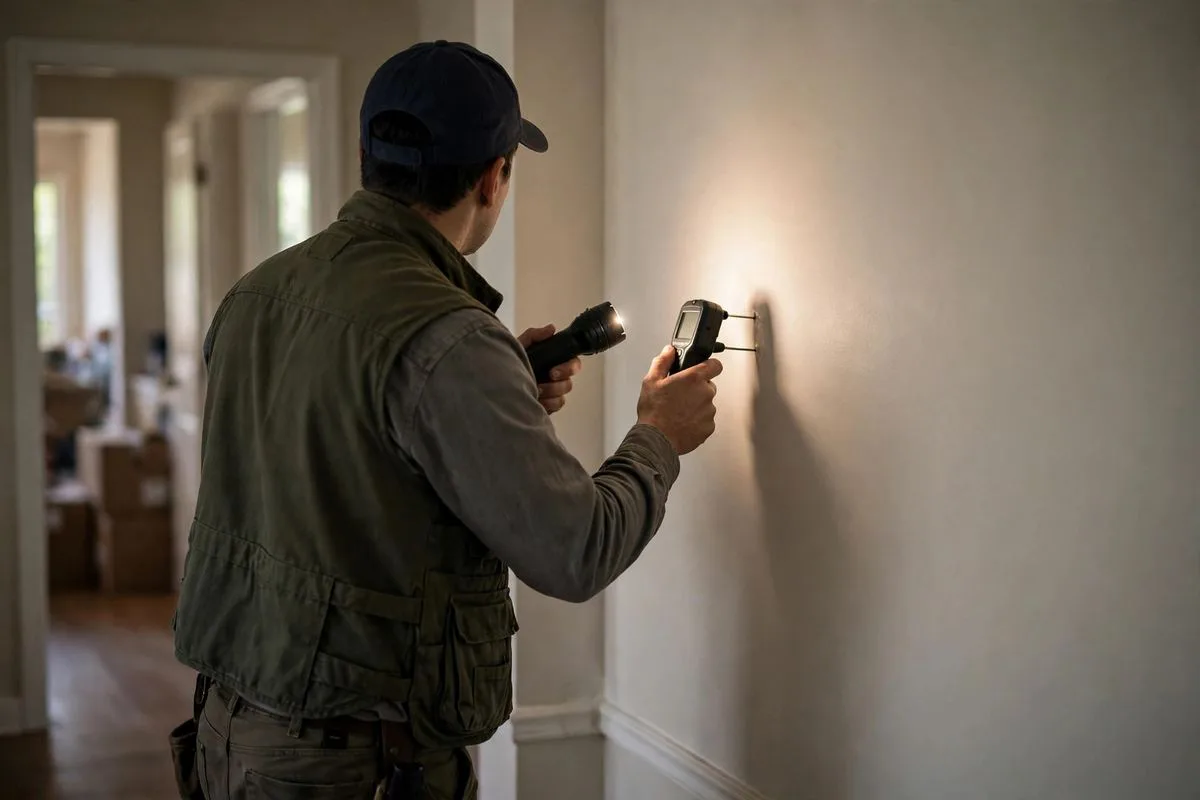
Mold usually smells musty, earthy or damp, like a wet basement, a damp closet, or old books that have been stored in a humid room. The smell is often described as stale, sour or like wet wood, and it is usually stronger in a closed room, in the morning, or after rain. It is not a single smell, because different molds and different materials produce different odours, but the musty, earthy quality is the common thread.
This post explains what that smell is, what else can cause a musty smell, and what to check when you notice it. A smell alone does not prove mold, and only an inspection with moisture readings can confirm the source. It is general information, not medical advice. Mold Removal Experts LA is a referral service that connects customers with independent local providers; it does not perform mold work itself.
What the musty smell actually is
The musty smell associated with mold comes from microbial volatile organic compounds, or MVOCs, which are gases released as mold grows on a damp material. Different molds release different compounds, and the material they are growing on also affects the smell, which is why one musty room can smell like wet wood while another smells like damp earth or stale air. The smell is usually stronger when the mold is actively growing on a wet material, and weaker when the material has dried out, although the mold can still be present when the smell fades.
The smell is also a clue about location. A musty smell that is strongest in one room, near one wall, or in a closet usually points to dampness in that area. A smell that is strongest when the air conditioning or heating runs can point to a problem in the duct system or near an air handler. A smell that appears after rain can point to a roof leak or water entering through a foundation or window. Noting when and where the smell is strongest helps a provider trace the source.
Musty smell causes that are not mold
Not every musty smell is mold. A damp towel left in a hamper, a wet rug, a clogged drain, a dirty air-conditioning filter, or a room that has been closed for weeks can all smell musty without any mold growth on a wall or floor. Dust, pet odour, cooking odour and old carpet can also smell stale in a closed room. The difference is usually persistence and location: a smell that goes away after cleaning, ventilating and drying the room is more likely a surface or airflow problem, while a smell that returns in the same place, or that is tied to a damp wall or floor, is more likely a moisture problem worth checking.
A musty smell can also come from a hidden source that is not mold at all, such as a dead animal in a wall cavity, a sewer gas leak, or a chemical odour from a new product. Those are different problems with different fixes, and they should not be assumed to be mold. If the smell is strong, if it is accompanied by a gas smell, or if it appeared suddenly, a provider or a plumber should be asked to check it rather than assuming it is mold.
What to check when you notice a musty smell
Start with the room where the smell is strongest. Look for staining or bubbling paint on ceilings and walls, warped flooring, dark grout or caulk, and soft drywall under bathrooms and kitchens. Check closets on exterior walls, rooms that stay closed, and the area under sinks. Look at the back of furniture against an exterior wall, and under rugs in a ground-floor room. If the smell is strongest when the air conditioning runs, check the filter, the condensate drain and the area around the air handler. If the smell appears after rain, check the ceiling below the roof and the walls below windows.
Also check the timing. A smell that is stronger in the morning, after foggy nights, or after the room has been closed suggests dampness that builds up overnight. A smell that is stronger after a shower suggests a bathroom ventilation problem. A smell that is stronger in one room and not in others suggests a local source rather than a whole-house problem. Write down where and when the smell is strongest, because that record helps a provider trace it.
What to check in each room
In a bathroom, check grout, caulk, the area behind the toilet and under the sink, and the ceiling below a bathroom above. In a kitchen, check under the sink, behind the dishwasher, and the wall behind the refrigerator. In a bedroom, check closets on exterior walls, the area behind furniture, and the floor near a window. In a living room, check the wall below a window or balcony, and the area near an exterior door. In an attic, check insulation, roof decking and the area around vents and chimneys. In a crawl space, check joists, subflooring and the vapour barrier. Each of those places has a different moisture source, and a provider can take moisture readings in each one to find which is wet.
- Bathroom: grout, caulk, behind the toilet, under the sink, ceiling below a bathroom above
- Kitchen: under the sink, behind the dishwasher, wall behind the refrigerator
- Bedroom: closets on exterior walls, behind furniture, floor near a window
- Living room: wall below a window or balcony, area near an exterior door
- Attic and crawl space: insulation, roof decking, joists, subflooring, vapour barrier
When a musty smell needs a professional
Ask a provider if the smell persists after cleaning and ventilating, if it is tied to a damp wall or floor, if it returns in the same place, or if it is accompanied by staining, warping or soft drywall. Also ask a provider if the source cannot be found, if the home is being bought or sold, or if someone in the home has a health concern. A provider connected through this site can inspect the area, map the moisture, and recommend testing or remediation where needed. Hidden mold detection is the service that covers a smell without visible growth, and the mold inspection page explains what an inspection covers. The post on how to tell if mold is black mold covers the related question of identification, and the post on mold versus mildew covers the difference between surface growth and deeper mold.
Companion hazards and other trades behind a smell
A musty smell in an older home can have more than one cause, and in Los Angeles many older homes were built before 1978. If the smell leads to work that opens a wall or removes material, a second question can arise: asbestos and lead. Asbestos was used in some building materials, including some insulation, floor tiles and joint compound, and lead paint was used in homes built before 1978. A provider who disturbs those materials should be asked how they handle that risk, whether testing is needed before demolition, and whether a specialist is brought in. Mold Removal Experts LA does not offer asbestos or lead testing or abatement, and mold providers do not offer it as part of mold work; where those hazards are suspected, a specialist in that field is the right call.
A smell can also point to other trades. A musty smell that is strongest when the heating or cooling runs may point to an air duct or HVAC system that needs an air-duct and HVAC restoration specialist to clean and restore it after any mold is removed. A smell that appears after rain may point to a roof leak that needs a roofer. Those are adjacent trades, not mold services, and a mold provider can coordinate with them so that the leak is fixed and the system is restored rather than only the smell being masked.
What not to do about a musty smell
Do not mask the smell with air freshener and assume the problem is solved. Air freshener does not dry a wall or fix a leak, and it can make it harder to trace the source later. Do not dry-brush, vacuum or tear open a wall to look for mold, because disturbing a hidden patch can spread spores into the air. Do not assume that a smell that fades when a room is ventilated means the problem is gone; it may only mean that the smell is diluted by fresh air while the damp material stays wet. The right step is to find the moisture, fix it, and then clean or remove the affected material, with a provider's help where the source is hidden or the area is large.
Published:
Related pages
Frequently asked questions
Can a dirty air filter smell like mold?
Yes. A dirty or damp filter, a clogged condensate drain, or dust and debris in a duct can smell musty when the system runs, without any mold growing on a wall. The difference is usually timing: a filter or drain smell is strongest when the system runs and fades when it is off, while a wall leak smell persists. A provider can check the filter, the drain and the moisture around the air handler to tell which it is.
How is a sewer gas smell different from a mold smell?
Sewer gas usually smells like rotten eggs or sulphur, and it is often strongest near a drain, a toilet or a floor drain, especially in a bathroom that is rarely used. A mold smell is usually musty and earthy, like a damp basement. Sewer gas can be a plumbing problem, such as a dry trap or a cracked vent, and it should be checked by a plumber promptly, because it is a different problem with a different fix.
Can a thermal camera find mold?
No, not directly. A thermal camera shows temperature differences, which can reveal a cold, damp area inside a wall or a leak that is not visible. It does not show mold itself, and a cold spot is not proof of mold. A provider uses the camera to find where to take moisture readings, and the readings confirm whether the material is wet.
How long does a musty smell last after mold is removed?
It usually fades once the moldy material is removed, the area is dried completely, and the moisture source is fixed. If the smell persists after the work, the source may still be active, or another damp area may not have been found. A provider can re-check moisture readings and, where needed, run post-remediation verification to confirm the area is dry.
Need mold help in Los Angeles?
Tell us where the mold is and how large the area looks. We will connect you with an independent local provider.
Request a referral Call (945) 422-7665
Mold Removal Experts LA is a referral service. We do not perform mold inspection, testing, or remediation. We connect you with independent local providers who do the work.