How to Tell If Mold Is Black Mold
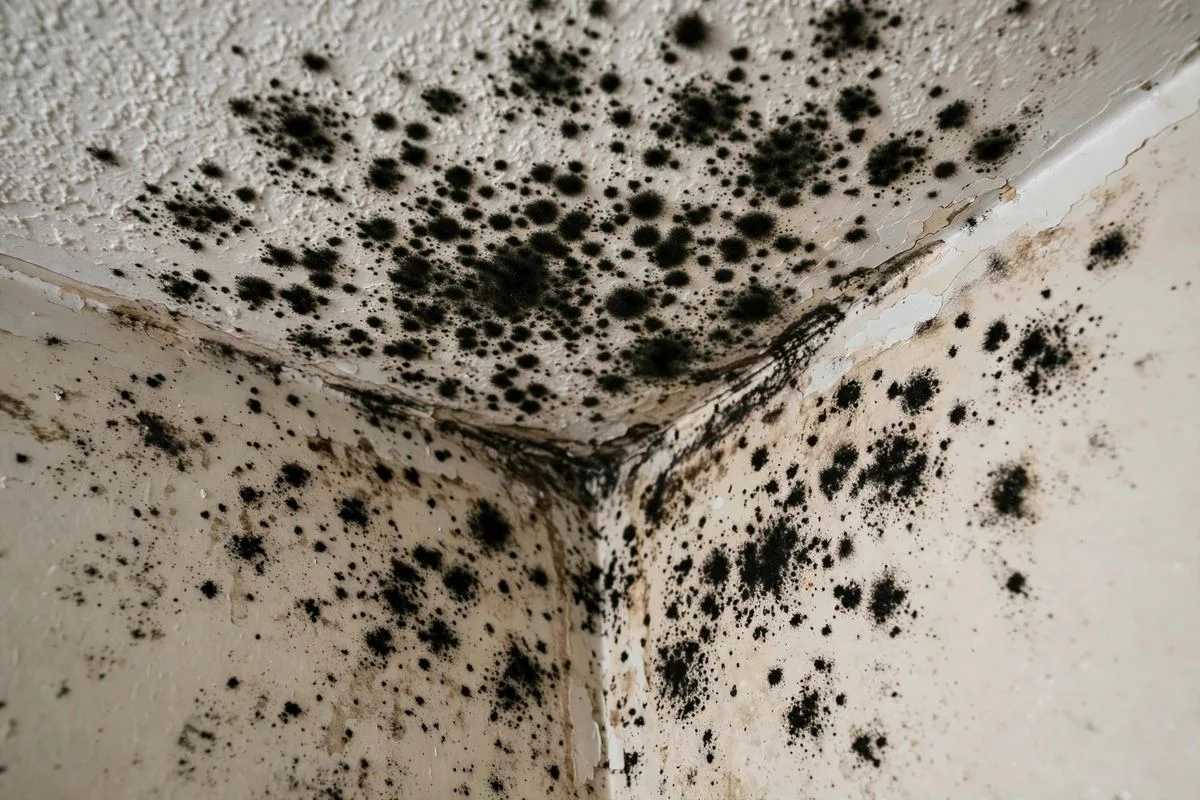
You cannot tell if mold is black mold by looking at it. Colour, smell and appearance cannot identify a mold species, and many molds are dark. Only laboratory testing of a sample can confirm whether a particular species, such as Stachybotrys chartarum, is present. That is the short answer, and it is the most important fact in this post, because most of the advice online about identifying black mold by colour is wrong.
This post explains what black mold is, why colour is not enough, what testing involves, and what to do while you wait for results. It is general information, not medical advice. Mold Removal Experts LA is a referral service that connects customers with independent local providers; it does not perform mold work itself.
What black mold actually is
Black mold is a common name for Stachybotrys chartarum, a dark-coloured mold that grows on very wet materials that contain cellulose, such as drywall, wood, paper and some insulation. It needs a high level of moisture, and it usually appears where a material has been wet for a long time, such as after a slow leak, a roof leak, or flooding. It is often described as black or dark green, and it can look slimy or sooty when wet, and powdery when dry.
Stachybotrys is not the only dark-coloured mold. Aspergillus, Cladosporium, Chaetomium, Alternaria and other molds can also be dark, and they grow in many of the same places. A dark patch on a wall could be any of those, or a mixture of several, and a light-coloured patch could also be a species that is sometimes dark. The colour of a patch depends on the species, the material, the age of the growth, and whether it is wet or dry. That is why colour is not a reliable way to identify a species.
Why colour, smell and photographs are not enough
Colour is not enough because many species are dark, and because the same species can look different on different materials and at different ages. Smell is not enough because many molds produce a similar musty smell, and because the smell depends on the material as much as on the species. A photograph is not enough for the same reasons, and because a photograph cannot show what is inside a material. A patch that looks like black mold in a photograph could be another dark mold, and a patch that does not look like black mold could still contain Stachybotrys.
Home test kits have the same limit. A kit that changes colour or grows mold in a dish can show that mold is present, but it cannot reliably identify the species, and it cannot measure how much mold is present in the air. The U.S. Environmental Protection Agency (EPA) notes that sampling and testing are not always needed, and that the decision to test should be based on what the results will be used for, such as a dispute, a home purchase, or clearance after remediation. If identification matters for a decision, a professional sample sent to a laboratory is the reliable route.
What laboratory testing involves
Laboratory testing starts with a sample taken by a provider. A surface sample can be taken with a swab, a tape lift or a bulk sample of material, and it is sent to a laboratory that identifies the mold types present under a microscope, or by culturing the sample. An air sample can also be taken, with a pump that draws a measured volume of air through a cassette, and the lab counts the spores and identifies the types. A surface sample is usually more useful for identifying what is growing on a wall, while an air sample is more useful for measuring what is in the air.
The lab report usually lists the mold types found, the spore counts, and a comparison with an outdoor control sample. It takes one to three business days for most air samples analysed by direct microscopy, and longer for cultured samples. The post on how long mold testing takes explains the timing in detail, including what can make it take longer. A lab report does not diagnose health effects, and it does not by itself prove that a particular mold caused a particular symptom. It is an environmental measurement, not a medical one.
What to do while you wait for results
While you wait for results, do not disturb the mold. Do not dry-brush, vacuum or tear open a wall to look for it, because that can spread spores into the air. Avoid the affected area where possible, especially if someone in the home has a respiratory condition, is a young child, is pregnant, or has a weakened immune system. If the patch is large, if it is in an air conditioning system, or if it follows sewage or floodwater, leave it alone and ask a provider. The EPA guidance is that if the moldy area is larger than about 10 square feet, a professional should be hired, and that threshold is a practical line, not a legal limit.
The results do not change the basic work that needs to be done. Whether the species is Stachybotrys or another mold, the moisture source needs to be fixed, the moldy material needs to be cleaned or removed, and the area needs to be dried completely. The species matters for a decision such as a dispute, a home purchase, or clearance after remediation, but it does not change the fact that the water source must be fixed. That is why the post on what kills black mold permanently focuses on the moisture fix rather than the species.
When identification matters and when it does not
Identification matters when the results will be used for a decision: a landlord-tenant dispute, a home purchase, an insurance claim, or clearance testing after remediation. In those cases, a laboratory report is useful because it is written evidence of what was present, and it can be compared with a later clearance test. Identification matters less when the decision is simply whether to fix a leak and clean or remove a patch, because the work is the same whichever species is present. The EPA notes that sampling is not always needed, and that in many cases the visible mold and the moisture source are enough to decide what to do.
If you are unsure whether testing is needed, ask a provider. A provider can inspect the area, map the moisture, and recommend testing where the results will change the decision. The mold testing page and the black mold remediation page explain what those services cover, and the post on black mold symptoms explains what the EPA and CDC say about health effects, without repeating overstated claims.
Published:
Related pages
Frequently asked questions
Can I identify black mold with a home test kit?
Not reliably. A home kit can show that mold is present, but it cannot reliably identify the species or measure how much is in the air. If identification matters for a dispute, a purchase or clearance after remediation, a professional sample sent to an accredited laboratory is the reliable route.
Is all black-coloured mold Stachybotrys?
No. Many molds are dark, including Aspergillus, Cladosporium, Chaetomium and Alternaria, and they grow in many of the same places. A dark patch could be any of those, or a mixture, and only laboratory testing can confirm the species.
Does finding Stachybotrys mean I have to leave my home?
Not necessarily. That depends on the size of the problem, where it is, and who lives in the home. Providers usually contain the work area, and people with respiratory conditions or weakened immune systems are often advised to stay out of the work area. Ask the provider what containment they use and whether anyone should leave during the work.
Do I need testing if I can already see the mold?
Not always. The EPA notes that sampling is not always needed, and that visible mold plus a moisture source is often enough to decide what to do. Testing is more useful when the results will be used for a dispute, a purchase, an insurance claim or clearance after remediation.
Need mold help in Los Angeles?
Tell us where the mold is and how large the area looks. We will connect you with an independent local provider.
Request a referral Call (945) 422-7665
Mold Removal Experts LA is a referral service. We do not perform mold inspection, testing, or remediation. We connect you with independent local providers who do the work.