Mold vs Mildew: What Is the Difference?
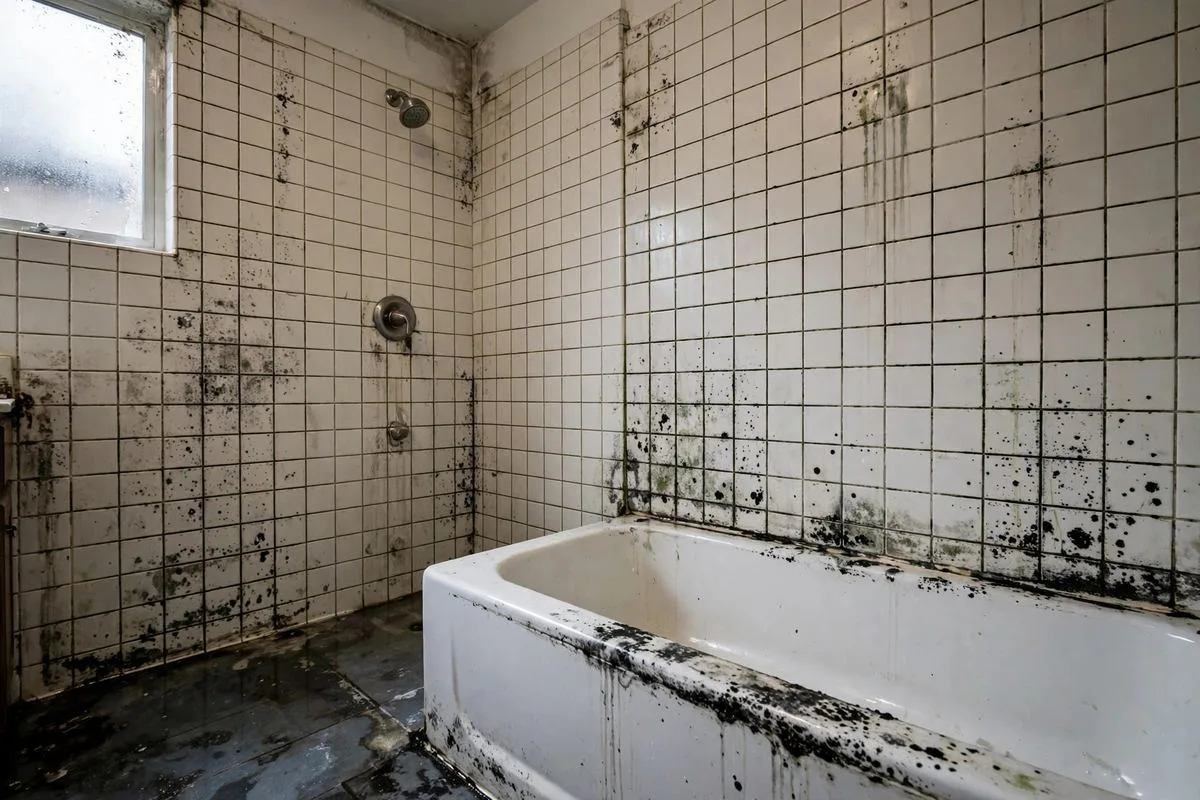
Mold and mildew are both fungi, but they are not the same thing. Mildew is a surface growth that usually stays flat, powdery or downy, and is often white, grey or light in colour. Mold is usually thicker, fuzzier or slimy, and is often green, black, brown or pink. The difference matters because mildew on a shower wall is usually a cleaning job, while mold inside drywall or wood is usually a moisture problem that needs more than a scrub.
This post explains how to tell them apart, where each one grows, what each one means for your home, and when to ask a provider instead of cleaning. It is general information, not medical advice. Mold Removal Experts LA is a referral service that connects customers with independent local providers; it does not perform mold work itself.
What mildew is
Mildew is a type of fungus that grows on surfaces, especially in damp, warm places with poor ventilation. In homes, it most often appears on shower tiles, grout, window frames, shower curtains and bathroom ceilings. It usually starts as small white, grey or light-coloured spots that spread across the surface in a flat, powdery or downy layer. It rarely grows deep into a material, because it feeds on surface moisture and on soap, body oils and other organic matter that sits on the surface.
Mildew is common in bathrooms because bathrooms are warm, humid and often poorly ventilated. A shower that is used daily, with no fan or a fan that is not run long enough, will keep grout and caulk damp for hours. Mildew can also appear on window frames where condensation collects, and on walls in a damp room. It is a sign that a surface is staying damp, but it does not by itself prove that there is a leak inside the wall.
What mold is
Mold is a broader group of fungi that grows on damp organic materials, including drywall, wood, paper, carpet, insulation and dust. It usually appears as a thicker, fuzzier or slimy growth, often green, black, brown or pink, and it can grow into a material rather than only on its surface. Mold needs moisture to grow, and the U.S. Environmental Protection Agency (EPA) notes that the moisture problem must be fixed for the mold problem to stay fixed. A patch of mold on drywall often means that the drywall itself is wet, not only its surface.
Mold can grow in places that are never seen, including inside walls, under floors, in attics and in crawl spaces. It can follow a slow plumbing leak, a roof leak, condensation on a duct, or water entering through a foundation crack. Because it grows inside materials, it is harder to clean than mildew, and porous materials that have been wet for a long time usually need to be removed and replaced rather than cleaned.
How to tell them apart at home
Look at colour, texture and depth. Mildew is usually white, grey or light, flat and powdery, and it sits on the surface. Mold is usually darker, thicker, fuzzier or slimy, and it may stain or soften the material underneath. Try a gentle test on a hard surface: mildew on tile often lightens or wipes away with a household cleaner, while mold on drywall or wood does not, and the material underneath feels soft or stained. That test is not a diagnosis, and colour alone does not identify a mold species. Only laboratory testing can confirm what species is present, and most situations do not need that level of identification.
Also look at where it is. Mildew is most common on shower tile, grout, window frames and other surfaces that get wet and then dry. Mold is more common on drywall, wood, carpet and insulation, especially near a leak, in a damp room, or inside a wall. If the growth is on a surface that gets wet daily and dries between uses, it is more likely mildew. If it is on a wall that stays damp, or it returns quickly after cleaning, it is more likely mold, and the moisture source should be checked.
What each one means for your home
Mildew usually means that a surface is staying damp and needs better ventilation or more frequent cleaning. Running a bathroom fan during and after a shower, wiping down tile and grout, and keeping the room dry between uses can reduce it. It does not usually mean that there is a leak inside the wall, although a patch that keeps returning despite ventilation and cleaning should be checked for a source behind the surface.
Mold usually means that a material is wet, and that the water source needs to be found. A patch on drywall, wood or carpet is not only a surface problem, and cleaning the surface is unlikely to be enough. The EPA guidance is that small areas on hard, non-porous surfaces can sometimes be cleaned by a homeowner, while larger areas, porous materials or mold in an air conditioning system call for a professional. If the patch is larger than about 10 square feet, or it keeps returning, ask a provider for an inspection.
Cleaning mildew and cleaning mold are different jobs
Mildew on tile or grout can often be cleaned with water and detergent, or with a commercial cleaner labelled for the surface, followed by thorough drying and better ventilation. The work is surface cleaning, and the fix is to keep the surface dry between uses. Mold on drywall, wood or carpet is a different job. The material itself is wet, and the growth is inside it, so cleaning the surface does not remove it. In that case, the material usually needs to be dried with professional equipment or removed and replaced, and the moisture source needs to be repaired. That is why the post on how to get rid of mold draws a line between cleaning a small surface patch and calling a provider for a larger or deeper problem.
If you are unsure which one you have, do not assume. Note where it is, what it looks like, and whether it returns after cleaning, and ask a provider for an inspection if it is on drywall, wood or carpet, if it is larger than about 10 square feet, or if it keeps returning. A provider can take moisture readings inside the wall and tell whether the material can be dried and cleaned or whether it should be removed.
When to ask a provider
Ask a provider if the growth is on drywall, wood, carpet or insulation, if it is larger than about 10 square feet, if it is in an air conditioning system, if it follows sewage or floodwater, or if it keeps returning after cleaning. Also ask a provider if the source cannot be found, or if someone in the home has a health concern that makes cleaning inappropriate. A provider connected through this site can inspect the area, map the moisture, and recommend testing or remediation where needed. The mold inspection page and the bathroom mold removal page explain what those services cover.
Published:
Related pages
Frequently asked questions
Is mildew the same as mold?
No. Mildew and mold are both fungi, but mildew is usually a flat, powdery surface growth that is white, grey or light in colour, while mold is usually thicker, fuzzier or slimy, often darker, and can grow into a material.
Is mildew dangerous?
Mildew is usually a surface growth in a damp bathroom or on a window frame, and it is often a cleaning and ventilation problem rather than a leak inside a wall. Anyone with a health concern should talk to a health care provider; this post does not give medical advice.
Can I clean mildew myself?
Mildew on tile or grout can often be cleaned with water and detergent or a commercial cleaner, followed by thorough drying and better ventilation. If it keeps returning despite ventilation and cleaning, the source behind the surface should be checked.
How do I know if it is mold or mildew?
Look at colour, texture and depth, and where it is. Mildew is usually light, flat and powdery on a surface that gets wet daily. Mold is usually darker, thicker and fuzzier, often on drywall, wood or carpet, and it may soften or stain the material underneath. Colour alone does not identify a species.
Need mold help in Los Angeles?
Tell us where the mold is and how large the area looks. We will connect you with an independent local provider.
Request a referral Call (945) 422-7665
Mold Removal Experts LA is a referral service. We do not perform mold inspection, testing, or remediation. We connect you with independent local providers who do the work.