Black Mold Symptoms: What to Know
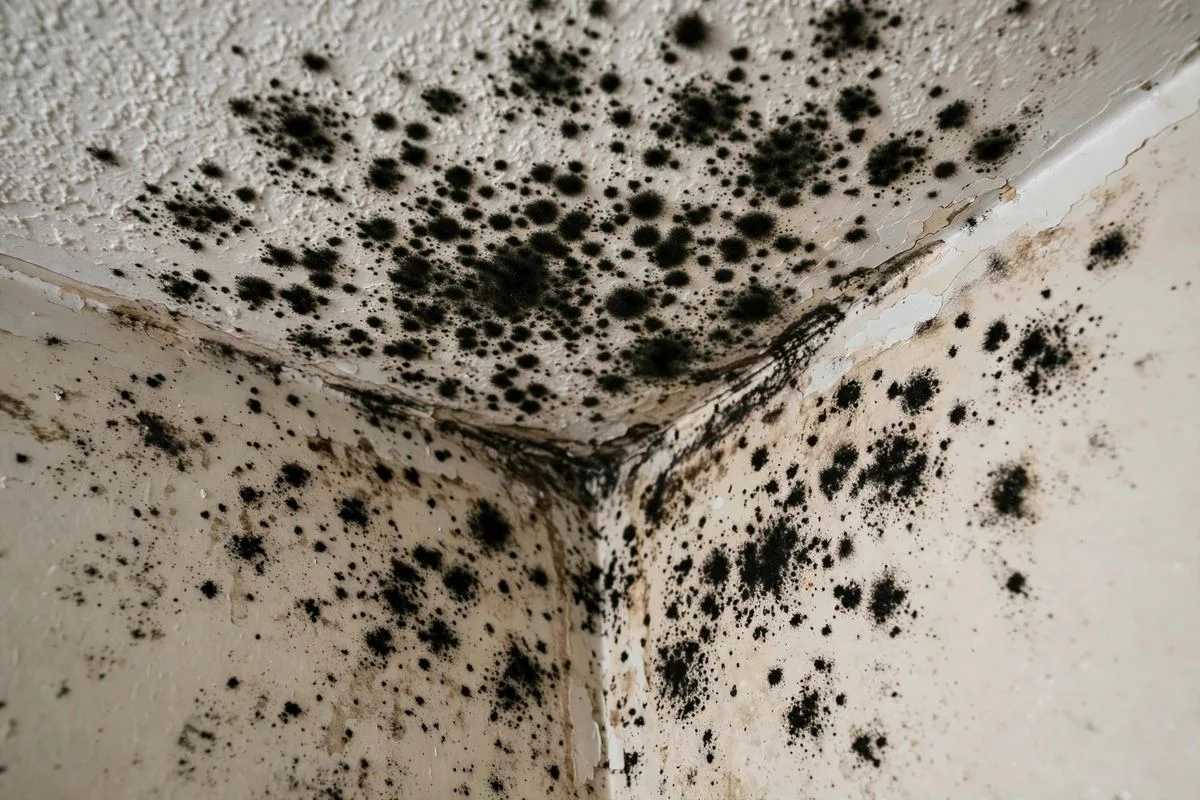
People who search for black mold symptoms usually want a clear list, and this post is honest about why no such list exists. There is no symptom that proves black mold exposure, and no symptom that proves a particular mold species caused it. The U.S. Environmental Protection Agency (EPA) and the Centers for Disease Control and Prevention (CDC) both state that mold exposure can cause health effects in some people, especially people with allergies, asthma or other respiratory conditions, and that the effects depend on the person, the amount of exposure and the length of exposure. Colour alone does not identify a mold species, and symptoms alone do not diagnose exposure.
This post explains what the EPA and CDC actually say, what is not known, and what to do if you are concerned. It is general information only, not medical advice, and it does not diagnose or treat any condition. If you have symptoms or a health concern, talk to a health care provider. Mold Removal Experts LA is a referral service that connects customers with independent local providers; it does not perform mold work itself.
What the EPA and CDC say about mold and health
The EPA states that mold can cause health effects, that some people are more sensitive than others, and that exposure can trigger allergic reactions, asthma attacks and irritation of the eyes, skin, nose, throat and lungs. The CDC states that mold exposure can cause similar effects, that people with asthma, allergies or weakened immune systems may be more affected, and that anyone with concerns should talk to a health care provider. Neither agency lists a set of symptoms that is specific to black mold, because the same kinds of effects can follow exposure to many kinds of mold, and because the evidence does not support a distinct black mold illness.
That lack of a distinct list is itself the important fact. Articles that list a long set of symptoms as proof of black mold exposure are going beyond what the evidence supports. The EPA and CDC framing is deliberately general: mold can affect health, sensitive people are more affected, and the right response to a health concern is a health care provider, not a home test or an internet list. This post follows that framing, and it does not repeat the overstated health claims that appear on some competitor sites, such as claims about brain infections or specific diseases, which are not supported by the EPA or CDC guidance.
Why symptoms alone cannot identify black mold
Black mold is a common name for Stachybotrys chartarum, a dark-coloured mold that grows on very wet materials such as drywall, wood and paper. It is not the only dark-coloured mold, and many other molds are dark as well. Colour, smell and appearance cannot identify a species, and only laboratory testing of a sample can confirm what species is present. Even when a species is confirmed, the presence of a species does not prove that it caused a particular symptom, because symptoms have many causes, and because exposure depends on how much mold is present, how long a person was exposed, and how sensitive that person is.
That is why a home mold test, a symptom list, or a photograph cannot diagnose exposure. A health care provider can take a history, examine a person, and consider other causes, which is work that a website cannot do. If you are concerned about symptoms, the useful steps are to talk to a health care provider, to reduce exposure by avoiding the affected area where possible, and to have the mold problem assessed by a provider who can find the moisture source and recommend remediation. The post on how to tell if mold is black mold explains identification in more detail, and it makes the same point: only laboratory testing can confirm a species.
Who may be more affected by mold
The EPA and CDC both note that some people are more sensitive to mold than others. People with allergies, asthma or other respiratory conditions may have stronger reactions, and people with weakened immune systems may be more affected. Children, older adults and people who are pregnant are often advised to be cautious, although the agencies do not list a separate set of effects for each group. The practical point is that the same mold problem can affect people in the same home differently, and that a person who feels unwell in a damp room should take that seriously without assuming a specific cause.
If someone in the home has a respiratory condition, is a young child, is pregnant, or has a weakened immune system, disturbing mold is not a good idea, and a professional provider should be asked instead. The EPA guidance is that if the moldy area is larger than about 10 square feet, or if the mold is in a heating, ventilation and air conditioning system, a professional should be hired. That threshold is a practical line, not a legal limit, and it reflects how much contamination a larger patch usually involves.
Companion hazards in older homes and other trades
Many Los Angeles homes with mold problems were built before 1978, and in those homes mold work can raise a second question: asbestos and lead. Asbestos was used in some building materials, including some insulation, floor tiles and joint compound, and lead paint was used in homes built before 1978. Disturbing those materials during demolition can release fibres or dust, so a provider who opens a wall or removes material in a pre-1978 home should be asked how they handle that risk, whether testing is needed before demolition, and whether a specialist is brought in. Mold Removal Experts LA does not offer asbestos or lead testing or abatement as a service, and the providers it connects customers with do not either as part of mold work; where those hazards are suspected, a specialist in that field is the right call, and a mold provider can coordinate with them.
A related point is that mold problems often involve other trades. A roof leak needs a roofer, a plumbing leak needs a plumber, and mold in an air duct or heating and cooling system may need an air-duct and HVAC restoration specialist to clean and restore the system after the mold is removed. Those are adjacent trades, not mold services, and a mold provider can coordinate with them so that the leak is fixed and the system is restored rather than only the visible mold being treated. Ask any provider what their scope covers, what they coordinate with other trades, and what should happen after their work is done.
Companion hazards and other trades in older homes
A home with a black mold problem is often an older home, and in Los Angeles many older homes were built before 1978. In those homes, the work of opening a wall or removing material can raise a second question: asbestos and lead. Asbestos was used in some building materials, including some insulation, floor tiles and joint compound, and lead paint was used in homes built before 1978. A provider who disturbs those materials should be asked how they handle that risk, whether testing is needed before demolition, and whether a specialist is brought in. Mold Removal Experts LA does not offer asbestos or lead testing or abatement, and mold providers do not offer it as part of mold work; where those hazards are suspected, a specialist in that field is the right call.
The same coordination applies to other trades. A roof leak that fed the mold needs a roofer, a plumbing leak needs a plumber, and mold in an air duct or heating and cooling system may need an air-duct and HVAC restoration specialist to clean and restore the system after the mold is removed. Those are adjacent trades, not mold services, and a mold provider can coordinate with them so that the leak is fixed and the system is restored. Federal law also requires a lead disclosure for the sale or rental of housing built before 1978, which is a separate disclosure from any mold issue, and a buyer or renter in a pre-1978 home should receive it.
What to do if you are concerned
If you are concerned about symptoms, talk to a health care provider first, and describe the mold problem, where it is, how long it has been there, and how much time is spent in the affected room. That history helps a provider consider other causes as well as mold. Do not try to diagnose exposure from a symptom list, a home test kit, or a photograph. If the mold problem itself needs attention, a provider connected through this site can inspect the area, map the moisture, and recommend testing or remediation where needed. Remediation, where needed, generally involves containing the affected area, removing damaged porous materials, cleaning and drying, and confirming the area is dry before repairs are made. Post-remediation verification is a separate, independent check that the work is complete.
Avoid disturbing the mold while you wait. Do not dry-brush, vacuum or tear open a wall to look for it, because that can spread spores into the air. If the area is large, if it is in an air conditioning system, or if it follows sewage or floodwater, leave it alone and ask a provider. The black mold remediation page explains what that service covers, and the post on how long black mold takes to grow explains how quickly a problem can develop after a leak.
Published:
Related pages
Frequently asked questions
Can air testing tell me whether Stachybotrys is in my home?
An air sample can identify the mold types present in the air at the time of sampling, including Stachybotrys if its spores are airborne then. But Stachybotrys spores are heavy and do not stay airborne as easily as some other molds, so an air sample can miss it even when it is growing on a wall. A surface sample of the growth itself is usually more reliable for identifying what is growing on a material.
What should I tell a doctor if I am concerned about mold?
Describe where the mold is, how long it has been there, how much time is spent in the affected room, and what symptoms you have noticed and when they started. Bring photographs and any inspection report if you have them. A doctor can take that history, examine you, and consider other causes, which is work a website or a mold provider cannot do.
I rent and my landlord has not fixed mold. What records should I keep?
Keep a dated copy of every written notice to the landlord, photographs of the mold and any leak, any inspection report or moisture readings, and a record of what the landlord did or did not do after being told. That record is useful whether the next step is a complaint to the Los Angeles Housing Department or a conversation with a lawyer. The tenant-rights guide on this site explains the California law in general terms.
Is there a lead disclosure for pre-1978 homes?
Yes. Under federal law, sellers and landlords of housing built before 1978 must disclose known lead-based paint and provide an EPA-approved information pamphlet. That disclosure is separate from any mold issue, and it applies whether or not mold is present. A buyer or renter in a pre-1978 home should receive it before signing.
Need mold help in Los Angeles?
Tell us where the mold is and how large the area looks. We will connect you with an independent local provider.
Request a referral Call (945) 422-7665
Mold Removal Experts LA is a referral service. We do not perform mold inspection, testing, or remediation. We connect you with independent local providers who do the work.